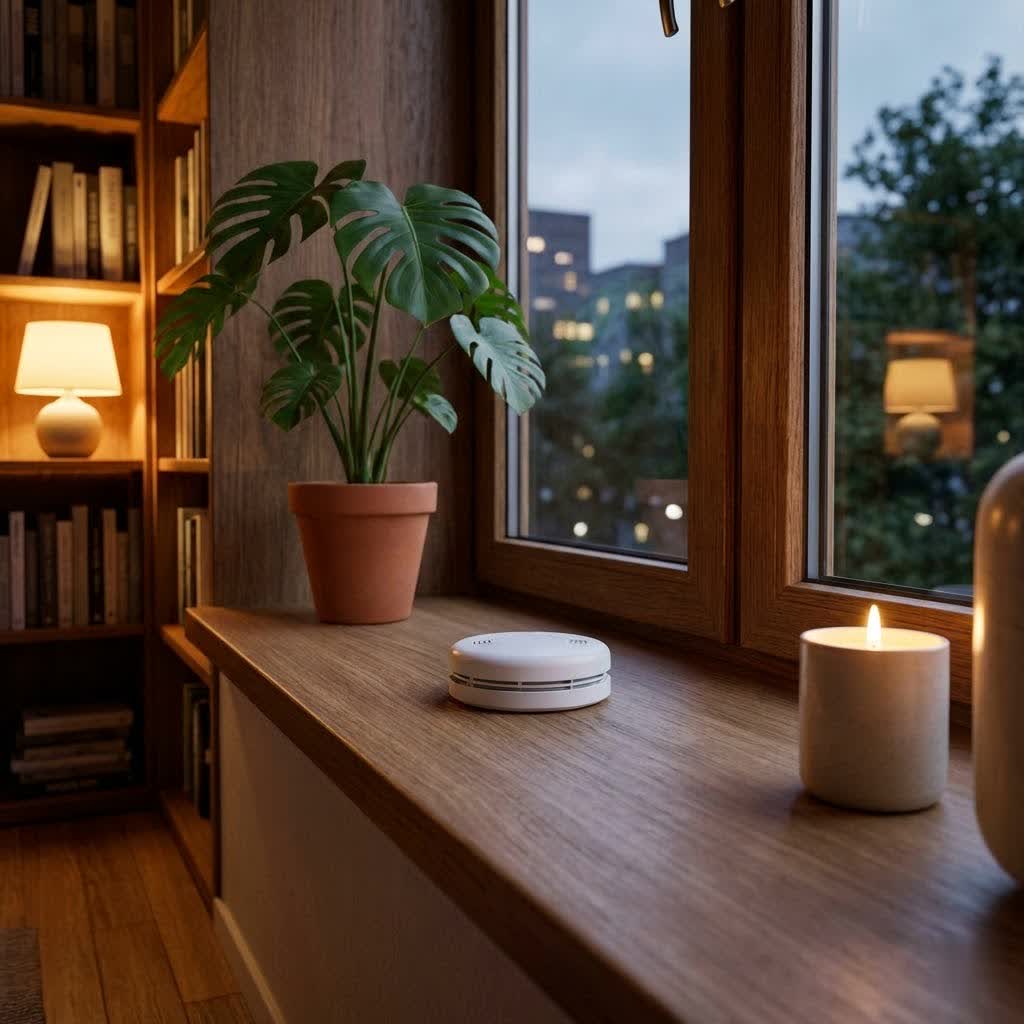
Protecting your home and loved ones from unseen dangers is a paramount concern for every homeowner. Among the most critical devices for safeguarding your household are smoke alarms and carbon monoxide detectors. While often confused or seen as interchangeable, these two safety essentials serve distinct, yet equally vital, roles. Fortunately, modern technology offers integrated solutions, bringing the power of a Smoke Alarm Carbon Monoxide Detector into one sophisticated unit. This comprehensive guide will delve into what these combination devices are, why they are indispensable, how they work, and how to choose and maintain the perfect system for your peace of mind.

What is a Smoke Alarm Carbon Monoxide Detector and Why is it Essential?
A smoke alarm carbon monoxide detector is a single device designed to detect both smoke, indicative of a fire, and the presence of carbon monoxide (CO) gas. While a traditional smoke detector alerts you to the visible threat of fire, and a standalone CO detector warns of the “silent killer,” a combined unit provides comprehensive protection against both hazards simultaneously. This integration simplifies home safety, reducing the number of devices needed and often making installation and maintenance more straightforward.
The necessity of these detectors is underscored by alarming statistics. Fires cause thousands of deaths and injuries annually, with smoke inhalation often being the primary cause of fatalities rather than burns. Carbon monoxide, a colorless, odorless, and tasteless gas produced by incomplete combustion in fuel-burning appliances, is equally perilous. Without a detector, its presence can go unnoticed, leading to symptoms ranging from headaches and dizziness to unconsciousness and even death. Early detection from a combined alarm can provide precious minutes to evacuate, significantly increasing survival rates for both fire and CO incidents.
Understanding the Different Types: Pros and Cons
To make an informed decision about your home safety, it’s crucial to understand the different sensor technologies at play within these combination units.
Photoelectric Smoke Alarms
Photoelectric smoke alarms operate by using a chamber with a light source and a light sensor. When smoke enters the chamber, it scatters the light, directing it towards the sensor and triggering the alarm.
- Pros: These alarms are particularly effective at detecting slow-burning, smoldering fires, which often produce a lot of visible smoke before any significant flames appear. They are less prone to false alarms from cooking fumes compared to ionization alarms.
- Cons: Photoelectric alarms may be slower to react to fast-flaming fires that produce less smoke initially.
|
Our Picks for the Best Smoke Detector in 2026
We may earn a commission when you use one of our links to make a purchase.
|
||
| Num | Product | Action |
|---|---|---|
| 1 | Smoke Alarm Fire Detector,Battery Operated Photoelectric Smoke Detector with Test Button and Low Battery Warning, Fire Alarms Smoke Detectors for Home, 6 Pack |

|
| 2 | First Alert SMI100, Battery-Operated Smoke Alarm, 3-Pack |
|
| 3 | 4-in-1 Gas & Carbon Monoxide Detector, Plug-in & Battery Powered – Multi-Gas Protection, Accurate CO, Temperature & Humidity Monitoring, LCD Display, Adjustable Brightness, Sensitive Alarm |
|
| 4 | First Alert SMI100-AC, Hardwire Interconnect Smoke Alarm with Battery Backup, 6-Pack |
|
| 5 | 3 Pack 10 Year Battery Operated Smoke and Carbon Monoxide Detector, Portable Fire Co Alarm for Home and Kitchen (White) |
|
| 6 | Kidde Smoke Detector, 10-Year Battery Powered, LED Warning Light Indicators |
|
| 7 | 6 in 1 Plug in Smoke and Carbon Monoxide Detector Combo, Portable Smoke, Gas & CO Detector with Battery Operated, Temp, Humidity - Smoke Alarm Carbon Monoxide Natural Gas Leak Detector for Home, RV |
|
| 8 | First Alert SMI100, Battery-Operated Smoke Alarm, 2-Pack |
|
| 9 | Kidde Hardwired Smoke Detector, AA Battery Backup, Interconnectable, LED Warning Light Indicators, 4 Pack |
|
| 10 | Kidde Hardwired Smoke & Carbon Monoxide Detector, AA Battery Backup Smoke Alarm, Interconnectable, LED Warning Light Indicators, 2 Pack |
|
Ionization Smoke Alarms
Ionization smoke alarms contain a small amount of radioactive material that ionizes the air between two electrically charged plates, creating a current. When smoke particles enter the chamber, they disrupt this current, causing the alarm to sound.
- Pros: Ionization alarms are generally more responsive to fast-flaming fires that produce tiny, invisible combustion particles quickly.
- Cons: They can be more susceptible to false alarms from minor cooking incidents, steam, or humidity. They also contain a minuscule amount of radioactive material, though it poses no health risk under normal conditions.
Dual-Sensor Smoke Alarms
Dual-sensor smoke alarms incorporate both ionization and photoelectric technologies into a single unit.
- Pros: By combining both detection methods, these alarms offer superior protection against a wider range of fire types – both fast-flaming and slow-smoldering. This provides a more balanced and comprehensive fire detection capability.
- Cons: Dual-sensor units typically come at a higher price point than single-sensor models due to their advanced technology.
Carbon Monoxide (CO) Detectors (Standalone vs. Combined)
Carbon monoxide detectors utilize electrochemical sensors that react specifically to CO gas. When CO is present, it causes a chemical reaction within the sensor, generating an electrical current that triggers the alarm if levels become dangerous.
- Standalone CO Detectors: These devices solely detect carbon monoxide.
- Combined CO Detectors: Integrated into smoke alarm units, these provide the “two-in-one” safety solution. They offer continuous monitoring for CO, a gas that can accumulate unnoticed, leading to severe health consequences. Many models feature digital displays that show current CO levels, offering an added layer of information.
Detailed Comparison: Smoke vs. CO vs. Combination Detectors
Understanding the nuances of each type can help in selecting the most appropriate device for various areas of your home.
| Criteria | Ionization Smoke Alarm | Photoelectric Smoke Alarm | Dual-Sensor Smoke Alarm | Carbon Monoxide (CO) Detector | Combination Smoke/CO Detector |
|---|---|---|---|---|---|
| Sensor Type | Ionization | Photoelectric | Ionization & Photoelectric | Electrochemical | Ionization/Photoelectric & Electrochemical |
| Primary Detection | Fast-flaming fires | Slow-smoldering fires | All fire types | Carbon Monoxide (CO) gas | Smoke (all types) & CO gas |
| Response Time | Faster for flaming | Faster for smoldering | Balanced for both | Continuous CO monitoring | Balanced for fire, continuous for CO |
| False Alarm Tendency | Higher (cooking, steam) | Lower (cooking, steam) | Moderate | Very low (unless faulty) | Moderate |
| Cost | Lower | Moderate | Higher | Moderate | Higher |
| Power Source | Battery, Hardwired | Battery, Hardwired | Battery, Hardwired | Battery, Plug-in, Hardwired | Battery, Plug-in, Hardwired |
| Environment Suitability | General areas (away from kitchen/bath) | Near kitchen/bathroom, bedrooms | All areas for comprehensive fire detection | Near fuel-burning appliances, bedrooms | All areas for comprehensive fire and CO detection |
| Certification | UL 217, EN 14604 | UL 217, EN 14604 | UL 217, EN 14604 | UL 2034, EN 50291 | UL 217, UL 2034, EN standards |
Your Comprehensive Buying Guide to the Right Smoke Alarm Carbon Monoxide Detector
Choosing the right smoke alarm carbon monoxide detector is a crucial decision that impacts your family’s safety. Consider these factors to ensure you make the best choice.
Assess Your Home’s Needs
- Space Coverage: Determine the square footage and number of levels in your home. Building codes often require detectors on every level, in every sleeping area, and outside each sleeping area.
- Specific Risk Areas: Identify rooms with fuel-burning appliances (furnace, water heater, gas stove, fireplace, garage) where CO is a greater risk, and areas prone to smoldering fires (bedrooms, living rooms) or flaming fires (kitchen).
- Budget: While safety should be paramount, evaluate your budget, remembering that higher-end models often offer more features and connectivity.
Key Selection Criteria
- Certification Quality: Always look for devices certified by recognized safety organizations such as Underwriters Laboratories (UL 217 for smoke, UL 2034 for CO) in North America or EN 14604 (smoke) and EN 50291 (CO) in Europe. These certifications ensure the product has met rigorous safety and performance standards.
- Battery Life and Warnings: Consider models with 10-year sealed batteries, which eliminate the need for annual battery changes and provide continuous power. All detectors should have a clear low-battery warning.
- Interconnectivity and Smart Features: Modern detectors can be interconnected, meaning if one alarm sounds, all alarms in the system will activate. Smart detectors offer even more advanced features, such as Wi-Fi connectivity for remote notifications to your smartphone, integration with smart home systems, and even self-testing capabilities.
- Ease of Installation and Maintenance: Choose devices that are easy to install, ideally with clear instructions. Features like “hush” buttons to temporarily silence nuisance alarms and easily accessible test buttons are also beneficial.
- Digital Display: For CO detectors, a digital display showing current CO levels can be invaluable, providing real-time data beyond just an alarm.
Top Smoke Alarm Carbon Monoxide Detectors
While specific product recommendations can vary based on features and current market offerings, here are common types to consider:
- Hardwired with Battery Backup: These are connected to your home’s electrical system, ensuring continuous power, with a battery backup to maintain operation during power outages. Often interconnected.
- 10-Year Sealed Battery Units: Ideal for easy installation without electrical wiring, these units offer a decade of maintenance-free battery life.
- Smart Combination Alarms: Devices from brands like Google Nest Protect or Kidde Smart combine photoelectric smoke and electrochemical CO detection with Wi-Fi connectivity, app control, and voice alerts.
- Pros: Comprehensive protection, remote monitoring, smart home integration, advanced features.
- Cons: Higher initial cost, reliance on home Wi-Fi.
Optimal Placement for Your Smoke Alarm Carbon Monoxide Detector
Strategic placement is as critical as the quality of the detector itself.
- General Principles: Install a combination detector on every level of your home, including the basement. Place one inside every sleeping area and outside each separate sleeping area.
- Ceiling vs. Wall: Since smoke and CO both rise, detectors should ideally be mounted on the ceiling. If on a wall, place it within 4 to 12 inches (10-30 cm) from the ceiling.
- Near Sleeping Areas: Crucially, CO detectors must be able to wake you up. Place them inside bedrooms or just outside.
- Near Fuel-Burning Appliances: Install CO detectors near potential CO sources, such as furnaces, water heaters, gas stoves, and fireplaces. However, place them at least 15 feet (4.5 meters) away from these appliances to avoid nuisance alarms from normal operation.
- Basements and Garages: A CO detector in the basement is essential due to the presence of many fuel-burning appliances. If you have an attached garage or a room above it, a CO detector is highly recommended there to detect exhaust leaks.
- Areas to Avoid:
- Directly in the Kitchen or Bathroom: Steam from showers or cooking fumes can trigger false smoke alarms.
- Near Vents, Doors, or Windows: Air currents can prevent smoke or CO from reaching the sensor.
- In Extremely Dusty, Humid, or Dirty Areas: These conditions can interfere with sensor function and cause false alarms.
- In Direct Sunlight or Near Fluorescent Lights: Can affect sensor performance.
Installation and Maintenance: Ensuring Lifelong Protection
Proper installation and regular maintenance are key to the longevity and effectiveness of your smoke alarm carbon monoxide detector.
Installation Steps (General)
- Read the Manual: Always refer to the manufacturer’s specific instructions.
- Choose the Location: Select optimal spots based on the guidelines above.
- Mount the Bracket: Secure the mounting bracket to the wall or ceiling with screws.
- Connect Power (Hardwired): If hardwired, connect the detector to your home’s electrical wiring, following safety precautions (turn off power at the breaker).
- Install Batteries: Insert fresh batteries, even if hardwired (for backup). For 10-year sealed units, the battery is integrated.
- Attach Detector: Twist or snap the detector onto the mounting bracket.
- Test the Alarm: Press the test button to ensure the alarm sounds.
Regular Maintenance
- Monthly Testing: Press the test button monthly to confirm the alarm is functioning.
- Battery Replacement: Replace removable batteries at least once a year, or when the low-battery warning sounds. For 10-year sealed units, replace the entire unit after 10 years.
- Cleaning: Gently vacuum or wipe the exterior of the detector every six months to remove dust and cobwebs, which can obstruct sensors.
- Replacement Schedule: All smoke and CO detectors have a limited lifespan. Smoke alarms typically last 10 years, and CO alarms generally last 5-7 years. Combination units often have a 7-10 year lifespan. Check the manufacturer’s date on the unit and replace it promptly when due.
Safety Standards and Certifications for Combination Detectors
The reliability of your smoke alarm carbon monoxide detector hinges on its adherence to stringent safety standards. In the United States, look for products certified by Underwriters Laboratories (UL).
- UL 217: The standard for smoke alarms.
- UL 2034: The standard for carbon monoxide alarms.
- UL 2075: For combination smoke and carbon monoxide alarms.
In European countries, the relevant standards are typically EN 14604 for smoke alarms and EN 50291 for carbon monoxide alarms. These certifications signify that the device has undergone comprehensive testing to ensure it meets minimum performance requirements, detects hazards effectively, and operates reliably in various conditions. Choosing certified products is not just a recommendation; it’s a critical step in ensuring the genuine safety of your home.
Conclusion
A smoke alarm carbon monoxide detector is more than just a piece of technology; it’s a vital guardian for your home, offering critical early warning against two of the most dangerous household threats: fire and invisible carbon monoxide gas. By understanding the different types, choosing a certified unit tailored to your home’s needs, and committing to proper installation and maintenance, you equip your family with essential protection. Don’t wait for an emergency to recognize the value of these devices. Take proactive steps today to ensure your smoke alarm carbon monoxide detector system is robust, reliable, and ready to protect. Is your home as safe as it could be?
Frequently Asked Questions
What is the ideal number of smoke and CO detectors for a home?
The National Fire Protection Association (NFPA) recommends installing smoke alarms on every level of your home, inside every bedroom, and outside each separate sleeping area. For carbon monoxide detectors, install one on every level and in any area containing fuel-burning appliances. For combination units, this often means one per level, inside bedrooms, and near major appliances.
How often should I test my smoke alarm carbon monoxide detector?
You should test your smoke alarm carbon monoxide detector monthly by pressing the test button. Additionally, replace removable batteries at least once a year, or when the low-battery warning sounds.
What’s the difference between a CO detector and a CO alarm?
In common usage, the terms “CO detector” and “CO alarm” are often used interchangeably. Technically, a CO detector continuously monitors carbon monoxide levels, while a CO alarm specifically sounds an alert when CO levels reach dangerous thresholds. Most devices sold for home use are combination detector/alarms.
Can a smoke detector detect carbon monoxide?
No, a standard smoke detector is designed to detect smoke particles from a fire and cannot detect carbon monoxide gas. Similarly, a standalone carbon monoxide detector cannot detect smoke. This is why combination smoke alarm carbon monoxide detectors are recommended, as they house separate sensors for each hazard.
How long do smoke and carbon monoxide detectors last?
Smoke detectors typically have a lifespan of 10 years from the date of manufacture. Carbon monoxide detectors usually last between 5 and 7 years. Combination units typically have a lifespan specified by the manufacturer, often falling within the 7-10 year range. Always check the manufacturing date on your unit and replace it according to the manufacturer’s recommendations.