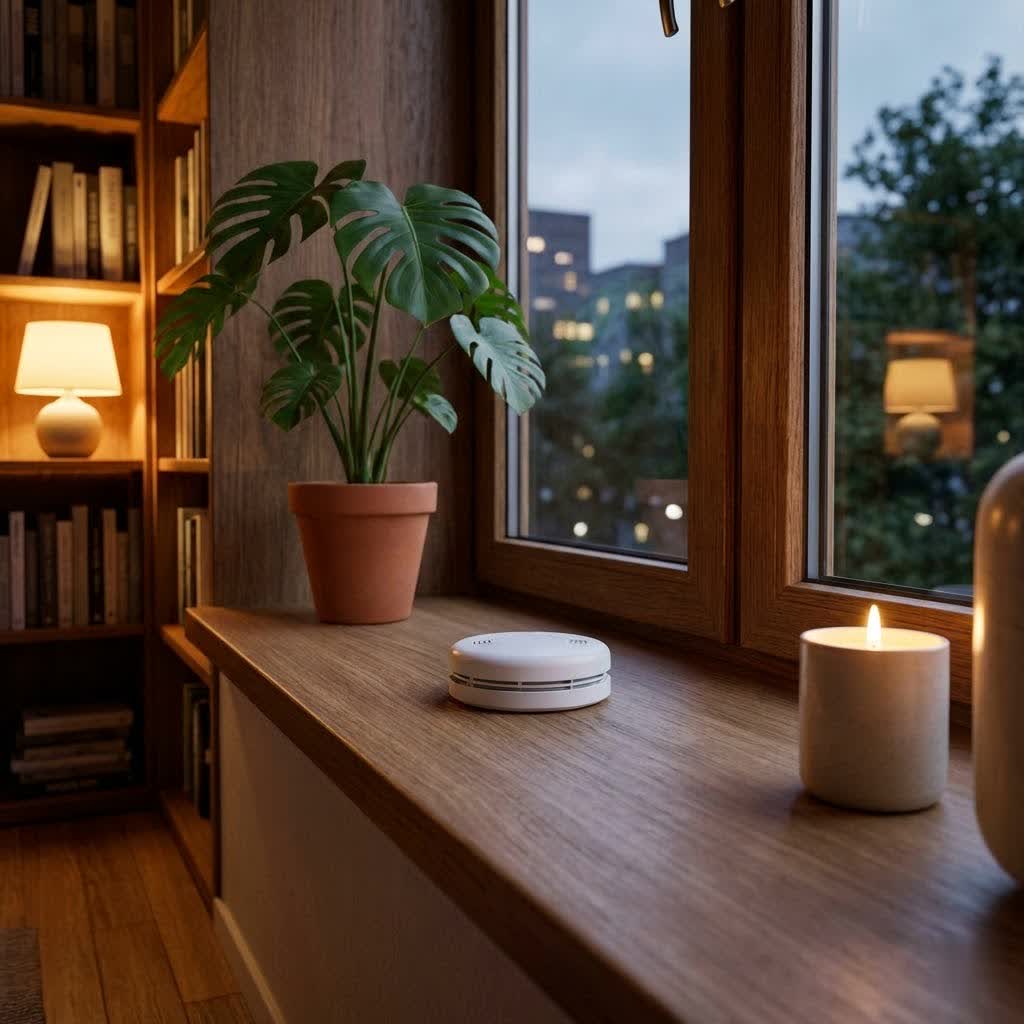
Every 23 seconds, a fire department responds to a fire somewhere in the United States, and nearly two-thirds of home fire deaths occur in homes with no smoke alarms or no working smoke alarms. These sobering statistics underscore the critical role that a reliable smoke detection system plays in safeguarding your home and loved ones. Among the leading names in fire safety, Kidde Firex Smoke Detectors stand out for their proven reliability and advanced technology. Whether you’re upgrading an existing system or installing new protection, understanding the nuances of these devices is crucial for optimal safety. This guide will walk you through everything you need to know about Kidde Firex smoke detectors, helping you make informed decisions for ultimate peace of mind.
What is a Kidde Firex Smoke Detector and Why is it Essential?
A Kidde Firex smoke detector is a vital fire safety device designed to detect the presence of smoke, indicating a potential fire, and alert occupants with an audible alarm. Originally manufactured by Firex Corporation, the brand is now under the Kidde umbrella, a global leader in fire safety products. These detectors operate on fundamental principles of fire science, sensing changes in the air to identify smoke particles. Their primary purpose is to provide early warning, allowing valuable time for evacuation and for emergency services to respond, drastically reducing the risk of injuries and fatalities in a fire incident. The importance of these devices cannot be overstated, as fires can spread rapidly, and early detection is often the difference between a minor incident and a tragic disaster. Kidde Firex offers a range of models, including ionization, photoelectric, dual-sensor, and combination smoke and carbon monoxide (CO) alarms, catering to diverse detection needs.
Classifying Kidde Firex Smoke Detectors: Pros and Cons
Understanding the different types of smoke detection technologies is key to choosing the right Kidde Firex alarm for specific areas of your home. Each technology has unique strengths and weaknesses that make it more suitable for certain fire types or environments.
Photoelectric Smoke Detectors
Photoelectric smoke detectors work by using a chamber with a light source and a light sensor. When smoke enters the chamber, it scatters the light, directing it towards the sensor and triggering the alarm.
- Advantages: Photoelectric alarms are generally more effective at detecting smoldering fires, which produce a lot of smoke but may take longer to erupt into flames. These fires are common from unattended cigarettes, electrical wiring, or overloaded circuits.
- Disadvantages: They can be more prone to nuisance alarms from non-fire-related particles like steam from a shower, cooking smoke, or dust. Therefore, they are often not recommended for kitchens or bathrooms unless equipped with advanced sensing technology to mitigate false alarms.
|
Our Picks for the Best Smoke Detector in 2026
We may earn a commission when you use one of our links to make a purchase.
|
||
| Num | Product | Action |
|---|---|---|
| 1 | First Alert SMI100, Battery-Operated Smoke Alarm, 3-Pack |

|
| 2 | First Alert SMI100, Battery-Operated Smoke Alarm, 2-Pack |
|
| 3 | 6 in 1 Plug in Smoke and Carbon Monoxide Detector Combo, Portable Smoke, Gas & CO Detector with Battery Operated, Temp, Humidity - Smoke Alarm Carbon Monoxide Natural Gas Leak Detector for Home, RV |
|
| 4 | Kidde Hardwired Smoke & Carbon Monoxide Detector, AA Battery Backup Smoke Alarm, Interconnectable, LED Warning Light Indicators, 2 Pack |
|
| 5 | Kidde Hardwired Smoke Detector, AA Battery Backup, Interconnectable, LED Warning Light Indicators, 4 Pack |
|
| 6 | First Alert SMI100-AC, Hardwire Interconnect Smoke Alarm with Battery Backup, 6-Pack |
|
| 7 | 4-in-1 Gas & Carbon Monoxide Detector, Plug-in & Battery Powered – Multi-Gas Protection, Accurate CO, Temperature & Humidity Monitoring, LCD Display, Adjustable Brightness, Sensitive Alarm |
|
| 8 | 3 Pack 10 Year Battery Operated Smoke and Carbon Monoxide Detector, Portable Fire Co Alarm for Home and Kitchen (White) |
|
| 9 | Kidde Smoke Detector, 10-Year Battery Powered, LED Warning Light Indicators |
|
| 10 | Smoke Alarm Fire Detector,Battery Operated Photoelectric Smoke Detector with Test Button and Low Battery Warning, Fire Alarms Smoke Detectors for Home, 6 Pack |
|
Ionization Smoke Detectors
Ionization smoke detectors contain a small amount of radioactive material that ionizes the air in a chamber, creating a small electric current. When smoke particles enter the chamber, they disrupt this current, causing the alarm to sound.
- Advantages: Ionization alarms are typically more responsive to fast-flaming fires, which consume combustible materials quickly and produce small, invisible smoke particles. These fires can originate from flammable liquids, paper, or cleaning supplies. A common Kidde Firex ionization model, hardwired with battery backup, is designed to alert to invisible fire particles, even during power outages.
- Disadvantages: They are less effective at detecting smoldering fires and can also be sensitive to cooking fumes, leading to false alarms. While the radioactive material is minimal and safe, some consumers prefer to avoid it for environmental reasons.
Dual Sensor Smoke Detectors
As the name suggests, dual sensor smoke detectors incorporate both ionization and photoelectric sensing technologies into a single unit.
- Advantages: These alarms offer the best of both worlds, providing comprehensive protection against both fast-flaming and smoldering fires. By integrating both sensors, they aim to detect a broader range of fire types more quickly and reliably.
- Disadvantages: Due to their dual technology, these units are typically more expensive than single-sensor alarms.
Combination Smoke and Carbon Monoxide (CO) Alarms
Many modern Kidde Firex alarms offer combination units that detect both smoke and carbon monoxide. Carbon monoxide is a colorless, odorless gas produced by incomplete combustion, often referred to as the “silent killer.”
- Advantages: These alarms provide two-in-one protection, saving space and simplifying installation by integrating two critical safety functions into one device. They offer a holistic approach to home safety.
- Disadvantages: If the unit needs replacement due to its end-of-life or malfunction for either smoke or CO detection, the entire combination alarm must be replaced.
Detailed Comparison Table of Kidde Firex Smoke Detector Types
| Feature / Type | Photoelectric | Ionization | Dual Sensor | Combination Smoke & CO |
|---|---|---|---|---|
| Sensor Type | Light Scatter | Ion Current Disruption | Photoelectric & Ionization | Photoelectric/Ionization & Electrochemical (CO) |
| Sensitivity | Best for smoldering fires (large, visible particles) | Best for fast-flaming fires (small, invisible particles) | Good for both smoldering and flaming fires | Good for both smoke types & carbon monoxide |
| Reliability | Good, but prone to steam/cooking false alarms | Good, but prone to cooking false alarms | High, broader fire type detection | High, comprehensive hazard detection |
| Power Source | Battery or Hardwired with Battery Backup | Battery or Hardwired with Battery Backup | Battery or Hardwired with Battery Backup | Battery or Hardwired with Battery Backup |
| Key Features | Hush button, test button, LED indicators | Hush button, test button, LED indicators | Hush button, test button, LED indicators | Voice alerts, digital display (on some), Hush |
| Best Use Case | Bedrooms, living rooms, hallways | Areas with potential for fast-flaming fires | General living areas, comprehensive protection | All living areas, especially where CO sources exist |
| Typical Lifespan | 10 years | 10 years | 10 years | 10 years |
Choosing the Right Kidde Firex Smoke Detector for Your Home (Buying Guide)
Selecting the appropriate Kidde Firex smoke detector involves considering your living space, potential fire risks, and desired features.
Assess Your Needs
Start by evaluating the specific requirements of your home:
- Area Size and Type: Consider the square footage and layout. For larger homes, interconnected alarms are essential for ensuring everyone hears the alert. Different areas, such as bedrooms, kitchens, or hallways, may benefit from specific sensor types.
- Risk Factors: Do you have a gas stove, fireplace, or attached garage? These areas may necessitate a combination smoke and CO alarm. Are there many electronic devices that could lead to electrical fires?
- Budget: While safety should be paramount, Kidde Firex offers a range of products across various price points. Determine what features are essential and where you can compromise.
Key Selection Criteria
When shopping for a Kidde Firex smoke detector, keep these important criteria in mind:
- Quality Certifications (UL, NFPA): Always look for alarms that are UL (Underwriters Laboratories) certified. Kidde alarms often meet UL 217 standards, which include rigorous testing for various fire types and nuisance alarm reduction. [cite: 1 search_result 1, 1 search_result 3, 1 search_result 4] Compliance with NFPA 72 (National Fire Protection Association) guidelines is also a strong indicator of a reliable product. [cite: 2, 1 search_result 5]
- Battery Life and Type: Kidde Firex offers both models with replaceable 9V batteries (which should be changed twice a year) and advanced models with 10-year sealed lithium batteries. The latter eliminates the need for frequent battery changes and usually provides an end-of-life chirp after a decade of operation, signaling it’s time to replace the entire unit. [cite: 2, 1 search_result 5]
- Interconnectivity: For maximum protection, opt for interconnected alarms. If one alarm detects smoke, all interconnected alarms in your home will sound, providing earlier warnings throughout the house. Kidde offers a full range of 120-Volt AC wire-in products with interconnect capability.
- Smart Features and Remote Notifications: Some Kidde Firex models integrate with smart home systems, offering features like Wi-Fi connectivity for smartphone alerts and real-time notifications, even when you’re away. [cite: 4, 1 search_result 5]
- Ease of Installation and Maintenance: Look for user-friendly designs that simplify both initial setup and ongoing maintenance, such as front-loading battery compartments or simple twist-on mounting brackets.
Top Kidde Firex Models
Kidde Firex offers a robust lineup of smoke detectors. While specific model numbers can vary and new products are regularly introduced, common features across their highly-rated range include:
- 10-Year Sealed Battery Models: These tamper-proof units provide a decade of continuous protection without battery changes, often featuring ambient light sensing to prevent late-night battery chirps.
- Hardwired with Battery Backup: Many Kidde Firex detectors are designed to be hardwired into your home’s electrical system, with a 9-volt battery backup ensuring functionality during power outages. They are often interconnectable.
- Combination Smoke and CO Alarms with Voice Alerts: Advanced models feature voice warnings that clearly indicate “Fire!” or “Carbon Monoxide!” alongside an 85-decibel siren, reducing confusion during an emergency.
- TruSense Technology: Kidde’s TruSense sensor technology, certified to UL 217 8th Edition, is designed to reduce nuisance alarms from common cooking activities while still responding faster to different types of fires. [cite: 1 search_result 1]
Optimal Placement for Your Kidde Firex Smoke Detectors
Correct placement is as crucial as selecting the right detector. Following national and local fire safety codes ensures maximum effectiveness.
General Principles:
Smoke rises, so the ideal location for a smoke detector is on the ceiling. Avoid placement in the “dead air” space where the ceiling meets a wall; typically, a detector should be at least 4 inches (10 cm) from the wall. Also, ensure alarms are not obstructed by furniture, curtains, or other objects that could block smoke detection.
Specific Locations:
- Every Level: Install at least one smoke detector on every level of your home, including the basement.
- Inside and Outside Sleeping Areas: Place a detector inside every bedroom and in the hallway or area immediately outside each sleeping area.
- Common Areas: Install detectors in common living spaces such as living rooms and family rooms.
Locations to Avoid:
- Kitchens: Keep smoke alarms at least 10 feet (3 meters) away from cooking appliances to minimize nuisance alarms from normal cooking activities. For kitchens, consider a photoelectric alarm designed with nuisance alarm reduction features.
- Bathrooms: Steam from showers can trigger false alarms, so avoid placing detectors directly in or near bathrooms.
- Garages: Vehicle exhaust can cause false alarms. If a detector is needed in a garage, consider one specifically designed for such environments.
- Near Vents, Windows, or Doors: Air currents can prevent smoke from reaching the detector.
- Damp or Very Dusty Areas: These conditions can interfere with sensor performance and lead to false alarms.
- Uninsulated Attics or Basements: Extreme temperature fluctuations can impact detector performance.
Kidde Firex Smoke Detector Installation and Maintenance
Proper installation and routine maintenance are essential for ensuring your Kidde Firex smoke detectors are ready to protect your home.
Step-by-Step Installation
For battery-operated models:
- Choose Location: Identify the optimal placement according to the guidelines above.
- Mounting Base: Smoke alarms come with a mounting base. Use this base to mark where screw holes will go on the ceiling or wall.
- Drill Holes: Select a drill bit slightly smaller than the included wall anchors and drill the marked holes.
- Insert Anchors: Tap the plastic screw anchors into the drilled holes with a hammer.
- Secure Base: Drive screws partially into the anchors, align the mounting base, and twist the alarm into position. Tighten the screws.
- Install Batteries: Insert the correct batteries (9V or 10-year sealed lithium) following the polarity markings.
- Test: Press the test/reset button to ensure the alarm sounds.
For hardwired models:
- Safety First: Turn off power at the circuit breaker.
- Wire Connection: Securely connect the alarm’s wiring to your home’s electrical system, following the manufacturer’s instructions. Ensure the green LED power light is on once power is restored.
- Mounting: Attach the alarm to the mounting bracket, typically with a simple twist.
- Battery Backup: Insert the backup battery. For hardwired units with 10-year sealed batteries, no separate battery installation is needed.
- Test: Restore power and press the test/reset button.
- During Construction: If installing during construction, keep dust covers on until 24 hours after all cleanup is complete to prevent dust from entering the sensor, which is a common cause of nuisance alarms.
Regular Maintenance
Consistent maintenance keeps your alarms functioning optimally.
- Test Monthly: Press the test/reset button on each alarm once a month to ensure the circuitry and horn are working.
- Clean Annually: At least once a year, clean your smoke alarms. Use a vacuum cleaner with a soft brush attachment or a can of compressed air to gently remove dust, pet hair, and debris from around the openings. Wipe the exterior with a damp cloth, but avoid soaking or using harsh chemicals.
- Replace Batteries (if applicable): For alarms with replaceable batteries, change them at least twice a year. A good practice is to do this when you change your clocks for daylight saving time.
- Replace Entire Unit: Kidde Firex smoke detectors have a lifespan of approximately 10 years from their manufacture date. After this period, the sensors can degrade, and the unit should be replaced, even if it appears to be working. Many models will emit an end-of-life chirp to signal this.
Troubleshooting False Alarms
If your Kidde Firex detector frequently triggers false alarms:
- Clean the Unit: Dust accumulation inside the sensor is the most common cause of nuisance alarms. A thorough cleaning with compressed air can often resolve this.
- Relocate: If an alarm is consistently triggered by cooking smoke or shower steam, consider relocating it further from the source or installing a photoelectric alarm designed for kitchens with advanced anti-nuisance features.
- Check Power (Hardwired): For hardwired units, an intermittent chirping might indicate a loose AC connection, causing the alarm to run only on battery power. Ensure wiring is secure.
Safety Standards and Certifications for Kidde Firex Smoke Detectors
When investing in a Kidde Firex smoke detector, understanding the safety standards and certifications it meets is paramount. These certifications ensure that the device has undergone rigorous testing and meets specific performance benchmarks.
- UL 217: This is the primary safety standard for smoke alarms in the United States, established by Underwriters Laboratories. Kidde has been at the forefront of meeting updated versions of this standard. The 8th Edition of UL 217, which took effect in May 2020, introduced new tests to reduce nuisance alarms from cooking and improve detection for modern home fires involving synthetic materials. [cite: 1 search_result 1] It mandates that alarms can differentiate between threatening fires and common false alarms, making them more reliable. Kidde alarms with TruSense sensors are certified to this standard. [cite: 1 search_result 1]
- NFPA 72: The National Fire Protection Association (NFPA) develops codes and standards, with NFPA 72 being the National Fire Alarm and Signaling Code. While NFPA doesn’t approve products directly, its codes provide comprehensive guidelines for the application, installation, location, performance, inspection, testing, and maintenance of fire alarm systems. [cite: 1 search_result 5] Kidde products are designed to comply with these essential guidelines, which are often adopted into state and local building codes.
- Other Certifications: Kidde Firex smoke detectors frequently meet additional state-specific regulations, such as those from the California State Fire Marshall, and federal requirements like NFPA 101, FHA, and HUD, ensuring broad compliance and trust. Always verify that the chosen model meets your local fire safety laws.
Conclusion
A Kidde Firex smoke detector is more than just a device; it’s a critical component of your home’s safety ecosystem, offering invaluable protection against the unforeseen threat of fire. From understanding the different sensing technologies—ionization for flaming fires, photoelectric for smoldering, and dual-sensor for comprehensive coverage—to navigating installation best practices and consistent maintenance, being informed is your first line of defense. By choosing UL-certified and NFPA-compliant Kidde Firex alarms, placing them strategically, and maintaining them diligently, you significantly enhance your home’s fire safety. Don’t wait until it’s too late; equip your home with the reliable protection it deserves. What steps will you take today to ensure your family’s fire safety?
Frequently Asked Questions
How often should I test my Kidde Firex smoke detector?
You should test all your Kidde Firex smoke detectors at least once a month by pressing the test/reset button. This ensures that the alarm’s circuitry and horn are functioning correctly, giving you confidence in its ability to alert you during an emergency.
What does it mean if my Kidde Firex smoke detector chirps once every minute?
A single chirp every minute usually indicates a low battery (for models with replaceable batteries) or that the unit has reached its end of life (for 10-year sealed battery models). For replaceable battery units, change the battery immediately. For 10-year units, it signals that the entire alarm needs to be replaced.
Can I install a Kidde Firex smoke detector near my kitchen?
It’s generally recommended to keep smoke detectors at least 10 feet away from cooking appliances to minimize nuisance alarms caused by normal cooking fumes. For kitchens or areas prone to steam, a photoelectric smoke alarm with advanced nuisance alarm reduction technology or a heat alarm might be a more suitable option.
What is the lifespan of a Kidde Firex smoke detector?
Most Kidde Firex smoke detectors have a recommended lifespan of 10 years from the date of manufacture. After this period, the internal components and sensors can degrade, making the alarm less reliable. It’s crucial to replace your alarms every 10 years, even if they appear to be working.
Are Kidde Firex smoke detectors interconnectable with other brands?
Kidde Firex smoke detectors are typically designed to be interconnected with other Kidde, Firex, Code One, and Sentinel products. While some general compatibility might exist, it’s always best to ensure full compatibility for interconnected systems by using alarms from the same brand or verified compatible lines to guarantee proper communication during an alarm event.
What is the difference between an ionization and a photoelectric smoke detector?
Ionization smoke detectors are generally more responsive to fast-flaming fires that produce small, invisible smoke particles, while photoelectric smoke detectors are better at detecting smoldering fires, which produce larger, visible smoke particles. Many experts recommend having both types or a dual-sensor alarm for comprehensive protection against various fire types.
How do I clean my Kidde Firex smoke detector?
You should clean your Kidde Firex smoke detector at least once a year. Use a vacuum cleaner with a soft brush attachment or a can of compressed air to remove dust and debris from around the openings. You can wipe the exterior with a damp cloth, but avoid using harsh chemicals or saturating the unit.