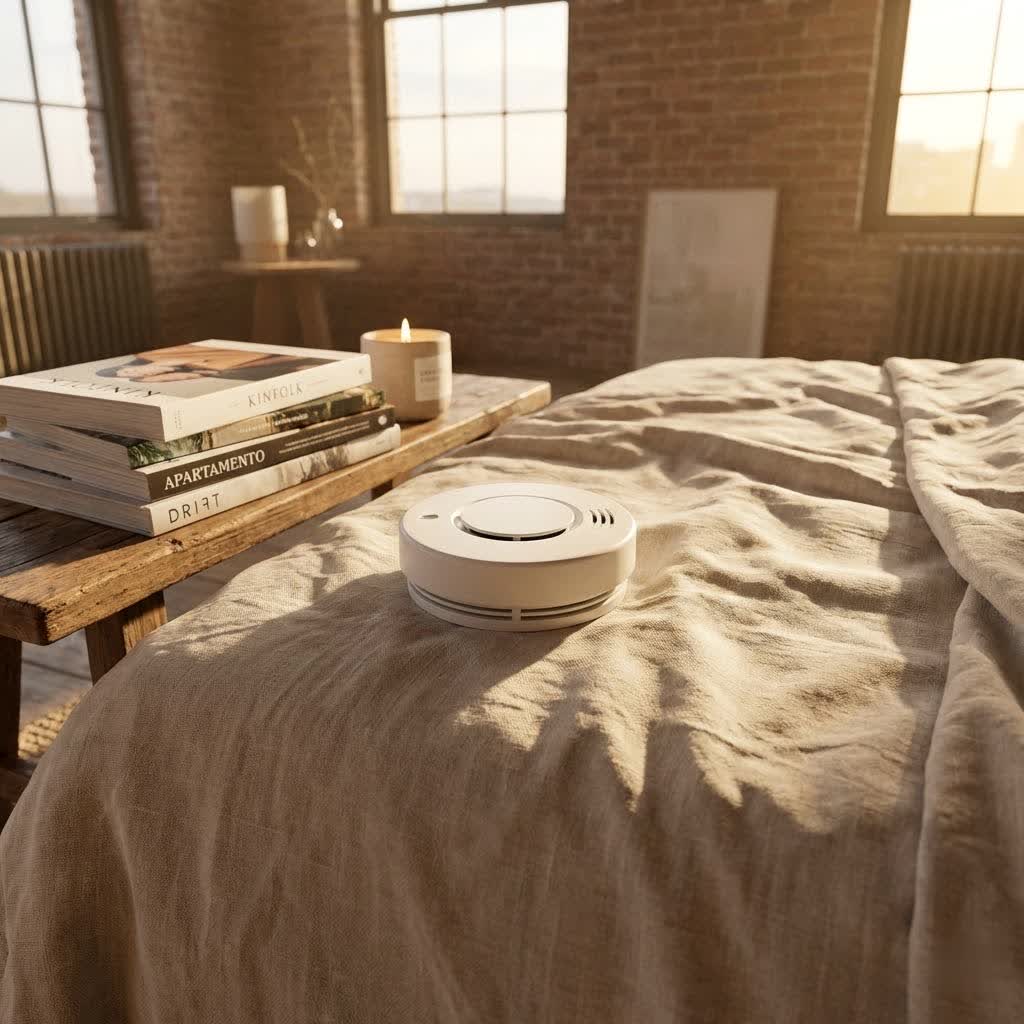
Imagine a fire breaks out in your home, but the piercing shriek of a standard smoke alarm goes unheard. For millions of individuals who are deaf or hard of hearing, this terrifying scenario is a real and constant concern. Traditional smoke alarms, while vital for many, often fail to provide adequate warning for those with hearing loss, especially during sleep when hearing aids are removed. This guide explores the world of hearing impaired smoke detectors, specialized devices designed to ensure everyone, regardless of their hearing ability, receives critical alerts in an emergency. We’ll delve into what these life-saving systems are, why they are indispensable, and how to choose and install the best one for your peace of mind.
What Are Hearing Impaired Smoke Detectors and Why Are They Essential?
Hearing impaired smoke detectors are specialized safety devices engineered to provide alerts to individuals who are deaf or hard of hearing in the event of a fire or carbon monoxide (CO) emergency. Unlike conventional smoke alarms that rely solely on loud audible signals, these detectors utilize a combination of visual, tactile, and sometimes specialized auditory alerts to ensure comprehensive notification.
Their necessity cannot be overstated. Standard smoke alarms typically emit high-frequency sounds that many people with hearing loss cannot perceive, particularly during sleep. This delay in detection can have dire consequences, as fires spread rapidly. Studies indicate that smoke alarms can reduce the chance of death by a house fire by 55%, a statistic that underscores the critical importance of effective warning systems for all individuals. For those with hearing impairment, specialized alarms bridge this crucial gap, transforming unheard warnings into unmistakable alerts and providing precious seconds to escape.
Classifying Hearing Impaired Smoke Detectors: Pros and Cons
Hearing impaired smoke detectors offer diverse alerting mechanisms, each with unique advantages and considerations. Understanding these types is key to selecting the most effective system for your household.
Photoelectric Smoke Detectors with Adaptive Alerts
Photoelectric smoke detectors are typically better at detecting slow-burning, smoldering fires that produce a lot of smoke but little flame. When integrated into systems for the hearing impaired, they are paired with specialized alerts.
- Pros: Excellent for detecting common household fires that smolder (e.g., from cigarettes, electrical wiring). When combined with visual or tactile components, they offer robust fire detection for individuals with hearing loss.
- Cons: Can be more prone to nuisance alarms from cooking fumes or steam if not properly placed. The adaptive alert components are usually supplementary and add to the overall system cost.
Ionization Smoke Detectors with Adaptive Alerts
|
Our Picks for the Best Smoke Detector in 2026
As an Amazon Associate I earn from qualifying purchases.
|
||
| Num | Product | Action |
|---|---|---|
| 1 | 6 in 1 Plug in Smoke and Carbon Monoxide Detector Combo, Portable Smoke, Gas & CO Detector with Battery Operated, Temp, Humidity - Smoke Alarm Carbon Monoxide Natural Gas Leak Detector for Home, RV |

|
| 2 | Kidde Hardwired Smoke & Carbon Monoxide Detector, AA Battery Backup Smoke Alarm, Interconnectable, LED Warning Light Indicators, 2 Pack |
|
| 3 | Smoke Alarm Fire Detector,Battery Operated Photoelectric Smoke Detector with Test Button and Low Battery Warning, Fire Alarms Smoke Detectors for Home, 6 Pack |
|
| 4 | Kidde Smoke Detector, 10-Year Battery Powered, LED Warning Light Indicators |
|
| 5 | First Alert SMI100-AC, Hardwire Interconnect Smoke Alarm with Battery Backup, 6-Pack |
|
| 6 | 3 Pack 10 Year Battery Operated Smoke and Carbon Monoxide Detector, Portable Fire Co Alarm for Home and Kitchen (White) |
|
| 7 | 4-in-1 Gas & Carbon Monoxide Detector, Plug-in & Battery Powered – Multi-Gas Protection, Accurate CO, Temperature & Humidity Monitoring, LCD Display, Adjustable Brightness, Sensitive Alarm |
|
| 8 | First Alert SMI100, Battery-Operated Smoke Alarm, 2-Pack |
|
| 9 | Kidde Hardwired Smoke Detector, AA Battery Backup, Interconnectable, LED Warning Light Indicators, 4 Pack |
|
| 10 | First Alert SMI100, Battery-Operated Smoke Alarm, 3-Pack |
|
Ionization smoke detectors excel at sensing fast-flaming fires that produce less visible smoke.
- Pros: Highly responsive to rapidly spreading, high-heat fires (e.g., from flammable liquids). Like photoelectric, they become effective for the hearing impaired when integrated with visual or tactile alerts.
- Cons: Less sensitive to smoldering fires. Some individuals may be concerned about the small amount of radioactive material used in their sensors, though it is generally considered safe.
Combination Smoke Detectors (Dual Sensor) with Adaptive Alerts
These detectors combine both photoelectric and ionization sensing technologies, offering broader protection against various fire types.
- Pros: Provide comprehensive detection for both slow-burning and fast-flaming fires. When coupled with hearing-impaired specific alerts (strobe, vibration), they offer the most robust fire safety solution. Many also include carbon monoxide detection.
- Cons: Generally higher in cost than single-sensor alarms. The added complexity might mean more features to manage.
Specialized Alert Mechanisms (Beyond Traditional Sensors)
Beyond the basic smoke detection technology, the true innovation for the hearing impaired lies in how the alert is delivered:
- Strobe Light Alarms (Visual): These alarms feature high-intensity, rapidly flashing LED lights, typically white or clear, designed to capture attention. Some advanced models can use different flash patterns to distinguish between smoke and carbon monoxide emergencies, offering clear visual cues even in sleep. Brands like First Alert and Kidde offer such units.
- Vibrating Alarms (Tactile): Often referred to as “bed shakers” or “vibrating pads,” these devices are placed under a pillow or mattress. When the smoke alarm system is triggered, they vibrate intensely, providing a powerful tactile alert to wake a sleeping individual. Companies like Bellman & Symfon and Aico are known for integrating these.
- Low-Frequency Sound Alarms: While not suitable for profound hearing loss, some alarms emit a lower-frequency tone (e.g., around 520 Hz) that may be more easily heard by individuals with moderate hearing loss or certain types of hearing impairment. It’s crucial to test if this is audible for the user.
- Acoustic Listening Devices: Devices like the Lifetone HL don’t detect smoke themselves but “listen” for the distinct sound pattern of a standard smoke alarm. Once detected, they activate their own low-frequency audible alarm, visual alerts, and/or bed shaker. This makes them highly versatile, especially for travel, as they can respond to any existing audible smoke alarm.
“For individuals with severe or profound hearing loss, a multi-sensory approach combining visual strobe lights and tactile bed shakers is paramount. Relying on a single alert method may not be sufficient to ensure timely evacuation.” – Dr. Elena Rodriguez, Fire Safety Accessibility Expert
Detailed Comparison Table: Adaptive Smoke Detectors
| Feature / Type | Strobe Light Alarms (Visual) | Vibrating Alarms (Tactile) | Low-Frequency Sound Alarms | Combination Systems (Strobe + Vibration + Sound) | Acoustic Listening Devices (External Trigger) |
|---|---|---|---|---|---|
| Primary Alert Method | Bright flashing LED lights | Strong vibrations (bed shaker/pillow pad) | Lower-pitched audible tone | Multiple: Flashing lights, vibration, audible tone | Triggered by standard smoke alarm sound; then visual/tactile/low-freq |
| Target User Group | Deaf, hard of hearing (awake or asleep) | Deaf, hard of hearing (especially during sleep) | Hard of hearing (with residual low-frequency hearing) | All hearing levels, maximum assurance | All hearing levels (as a supplementary alert system) |
| Effectiveness During Sleep | High (if visible) | Very High (direct physical alert) | Moderate (if hearing aids are removed) | Very High (multiple sensory alerts) | High (if integrated with shaker/strobe) |
| Nuisance Alarm Risk | Low (visual only) | Low (tactile only) | Varies by user’s hearing | Varies by integrated sensor type | Low (only triggered by another alarm) |
| Interconnectivity | Often part of interconnected systems (hardwired/wireless) | Often part of interconnected systems (hardwired/wireless) | Can be standalone or interconnected | Typically interconnected for synchronized alerts | Often standalone, listening for other alarms |
| Carbon Monoxide (CO) Support | Many models differentiate CO with distinct flash patterns | Can be integrated with CO alarms for tactile alerts | Some models may include CO detection | Commonly includes CO detection with distinct alerts | Can be triggered by CO alarms if they emit standard pattern |
| Power Source | Hardwired with battery backup; sometimes battery-only | Plug-in with battery backup; battery-only (for pads) | Battery or hardwired | Hardwired with battery backup; some wireless battery systems | Plug-in with battery backup |
| Typical Cost Range | Moderate to High (for standalone strobe units) | Moderate (for standalone shakers) | Low to Moderate | High (for comprehensive systems) | Moderate |
| Examples (Brands) | First Alert, Kidde, Aico | Bellman & Symfon, Aico, Lifetone HL | Kidde, First Alert | First Alert, Bellman & Symfon | Lifetone HL |
Comprehensive Buying Guide: Choosing the Right Hearing Impaired Smoke Detector
Selecting the right hearing impaired smoke detector involves a thoughtful evaluation of your specific needs, the features available, and adherence to safety standards.
1. Identify Your Specific Needs
- Severity of Hearing Loss: For profound deafness, visual and tactile alerts are non-negotiable. For moderate hearing loss, low-frequency sound alarms might be a supplement, but visual and tactile are still highly recommended, especially for sleeping hours.
- Household Composition: Do all residents have hearing impairment, or only some? An interconnected system ensures everyone receives an alert.
- Living Space: Consider the number of bedrooms, floors, and potential locations for alarms. A multi-room or multi-floor setup will benefit from interconnected systems.
- Budget: Prices vary significantly based on features and system complexity. Determine what you can comfortably invest in for essential safety.
2. Crucial Criteria for Selection
- Alert Modalities (Visual, Tactile, Low-Frequency Audio): Opt for a system that provides at least two, preferably all three, types of alerts. A combination of flashing strobe lights and a powerful bed shaker is considered the gold standard for alerting sleeping individuals with severe hearing loss.
- Interconnectivity: This is a paramount feature. When one alarm detects smoke, all connected alarms (including strobe lights and bed shakers) should activate simultaneously. This ensures widespread notification, regardless of where the fire originates. Both hardwired and wireless (e.g., RadioLINK) interconnected systems are available.
- Carbon Monoxide (CO) Detection: Many fire safety systems now integrate CO detection. Ensure the system provides distinct visual or tactile alerts for CO emergencies, preventing confusion with smoke alarms. Some strobes have different flash patterns for smoke versus CO.
- Certifications and Standards: Look for reputable certifications such as UL 217 (for smoke alarms), UL 2034 (for CO alarms), EN 14604 (European standard for smoke alarms), and ADA compliance for strobe lights (ensuring sufficient light intensity and flash rate). For CO alarms, check for BS EN 50291 Part 1 and the BSI Kitemark symbol. These certifications guarantee that the devices meet rigorous safety and performance criteria.
- Battery Backup: Essential for hardwired systems to ensure continuous operation during power outages. For battery-powered units, look for long-life batteries (e.g., 10-year sealed batteries) and a clear low-battery warning.
- Ease of Installation and Maintenance: Choose systems that are straightforward to install. Features like a “hush” button for false alarms, easy battery replacement (if applicable), and clear testing instructions contribute to user-friendliness.
- Smart Features/Connectivity: Some modern alarms offer smartphone app integration, sending alerts directly to your phone. This can provide an additional layer of security and remote monitoring.
3. Top Hearing Impaired Smoke Detectors (Examples)
While specific product availability can vary, several brands consistently offer highly-rated solutions for the hearing impaired:
- First Alert Hardwired Hearing Impaired LED Strobe Light Smoke Alarm: A popular choice featuring a powerful LED strobe and often different flash patterns for smoke and CO. Designed to integrate with other hardwired First Alert alarms.
- Pros: High-intensity visual alert, distinguishes smoke/CO, reliable brand.
- Cons: Requires hardwiring, usually needs a compatible base smoke detector.
- Kidde Smoke Detector with Safety Light for Hearing Impaired: Some Kidde models offer low-frequency sound alerts combined with a safety light, and their interconnected systems can include strobe lights and bed shakers.
- Pros: Versatile options, known for reliability, some models offer low-frequency sound.
- Cons: Low-frequency sound may not suffice for all hearing losses.
- Bellman & Symfon Smoke/Fire and Carbon Monoxide Alarm Notification System: Offers comprehensive kits with loud sounds, bright flashing lights, and strong bed shaker vibrations. Often includes an alarm clock receiver.
- Pros: Multi-sensory alerts, integrated CO, strong bed shaker, ideal for heavy sleepers.
- Cons: Can be a higher-priced comprehensive system.
- Aico RadioLINK Alarm Kit: Features wireless interconnection technology, making installation simpler. Their kits include a strobe light and a vibrating pillow pad.
- Pros: Wireless interconnectivity, wide-angle strobe light, robust vibrating pad.
- Cons: Initial cost for a full system may be higher.
- Lifetone HL Bedside Fire Alarm and Clock: While not a smoke detector itself, this device listens for the sound of existing smoke alarms and then triggers a low-frequency T3 alarm, flashes “FIRE” on its display, and activates a powerful bed shaker.
- Pros: Works with any standard smoke alarm, portable, strong bed shaker.
- Cons: Requires an existing audible smoke alarm to function.
Optimal Placement for Hearing Impaired Smoke Detectors
Strategic placement is crucial for the effectiveness of hearing impaired smoke detectors, especially for those that rely on visual and tactile alerts.
- Bedrooms: This is the most critical location. A strobe light should be placed where it is clearly visible from the sleeping area, ideally mounted on the wall or ceiling. If using a bed shaker, ensure it is firmly placed under the pillow or mattress.
- Hallways and Common Areas: Install strobe lights in central hallways, living rooms, and any other frequently used common areas to ensure alerts are received during waking hours.
- Near Exits: Place alarms and their corresponding alert devices along escape routes to guide occupants to safety.
- Ceiling Placement: For smoke detectors themselves, they should be mounted on the ceiling, at least 10 cm (4 inches) from any wall, or high on a wall, at least 10-30 cm (4-12 inches) below the ceiling.
- Multi-Level Homes: Ensure at least one smoke detector (with associated visual/tactile alerts) is installed on every level of the home, including the basement.
- Areas to Avoid:
- Kitchens: Keep detectors away from cooking fumes and steam to prevent nuisance alarms. A good rule of thumb is at least 3 meters (10 feet) from cooking appliances.
- Bathrooms: Humidity and steam can trigger false alarms.
- Near Vents or Drafts: Air currents from windows, doors, or HVAC vents can interfere with smoke reaching the detector.
- Garages: Vehicle exhaust can cause false alarms.
- Dusty Areas: Excessive dust can lead to false alarms and reduce sensor effectiveness.
Installation and Maintenance of Your Hearing Impaired Smoke Detector
Proper installation and regular maintenance are vital to ensure your hearing impaired smoke detector system functions reliably when it matters most.
Step-by-Step Installation (General Guide)
- Read the Manufacturer’s Instructions: Always prioritize the specific instructions provided with your device, as steps can vary by model.
- Mount the Smoke Detector:
- For ceiling mounts, use the provided mounting bracket and screws.
- For wall mounts, ensure it’s high on the wall but not in “dead air” spaces directly at the ceiling intersection.
- If hardwired, ensure power is off at the circuit breaker before connecting wiring.
- Install Strobe Lights: Mount strobe units in highly visible locations within bedrooms and common areas, following manufacturer guidelines for optimal light coverage. Many are hardwired or plug into an outlet.
- Place Bed Shakers: Position the vibrating pad under your pillow or mattress, ensuring it can effectively wake you. Connect it to the main alarm unit or receiver as instructed.
- Connect Interconnected Systems:
- Hardwired: Connect alarms using designated wiring.
- Wireless: Follow pairing instructions to link all units (smoke detectors, strobes, bed shakers) wirelessly.
- Insert Batteries: Install fresh batteries in all units, including backup batteries for hardwired systems.
- Test the System: After installation, thoroughly test the entire system. Press the test button on each smoke detector to ensure the audible alarm sounds, strobe lights flash, and bed shakers vibrate. Confirm all interconnected devices activate.
Regular Maintenance Schedule
- Monthly Testing: Test all smoke detectors and interconnected components monthly. This typically involves pressing the test button on each unit.
- Battery Replacement:
- For alarms with replaceable batteries, change them at least once a year. A good reminder is to do it when you change your clocks for daylight saving time.
- For units with 10-year sealed batteries, follow the manufacturer’s guidance for replacement of the entire unit after 10 years.
- Cleaning: Gently vacuum or wipe the outside of your smoke detectors at least once a year to remove dust and cobwebs, which can interfere with sensors and cause false alarms.
- Full System Replacement: Smoke detectors have a lifespan of about 10 years. After this period, their sensitivity can degrade. Replace all units, even if they seem to be working.
Handling False Alarms
- Ventilation: If a false alarm is triggered by cooking smoke or steam, ventilate the area immediately by opening windows or using exhaust fans.
- Hush Feature: Many modern alarms include a “hush” or “silence” button that temporarily silences the alarm for a few minutes without compromising safety.
- Placement Review: If false alarms are frequent, reassess the detector’s placement. It might be too close to a kitchen, bathroom, or dusty area.
Safety Standards and Certifications for Hearing Impaired Smoke Detectors
When investing in a hearing impaired smoke detector, understanding the relevant safety standards and certifications is crucial. These benchmarks ensure that the devices meet stringent performance and reliability requirements.
- UL 217 (Standard for Safety for Single and Multiple Station Smoke Alarms): This is the primary safety standard for smoke alarms in the United States. It certifies that the device has passed rigorous tests for smoke detection, alarm sound levels, battery life, and overall construction. For hearing impaired models, it often relates to the smoke sensing capability.
- UL 1971 (Standard for Signaling Devices for the Hearing Impaired): This specific UL standard applies to visual and tactile signaling devices, ensuring that strobe lights have the correct candela (light intensity) and flash rates, and that vibrating devices meet performance requirements to effectively alert individuals with hearing impairments.
- EN 14604 (Smoke alarm devices): This is the European standard for smoke alarms, similar to UL 217. Devices meeting this standard are certified for performance and safety in European markets.
- Americans with Disabilities Act (ADA) Compliance: Strobe lights designed for the hearing impaired often need to be ADA compliant. This typically means the strobe must have a minimum light output of 177 candela and flash at a specific rate (e.g., 1 Hz).
- UL 2034 (Standard for Safety for Single and Multiple Station Carbon Monoxide Alarms): If your system includes CO detection, this standard ensures the CO alarm component meets safety and performance criteria.
- BS EN 50291 Part 1 (Electrical apparatus for the detection of carbon monoxide in domestic premises): This European standard specifically covers CO detectors for residential use, and the BSI Kitemark™ symbol indicates independent third-party certification to this standard, offering additional assurance of quality and safety.
These certifications mean that the device has been independently tested and verified to perform as expected in an emergency, providing peace of mind that you are investing in a reliable life-saving product. Always look for these marks on product packaging or specifications.
Conclusion
Ensuring comprehensive fire safety for every member of your household, particularly those with hearing impairments, is a critical responsibility. Hearing impaired smoke detectors, with their innovative visual, tactile, and specialized auditory alerts, provide an essential layer of protection that traditional alarms cannot. By understanding the different types of systems available, prioritizing features like interconnectivity and recognized certifications, and adhering to proper installation and maintenance practices, you can create a safer home environment for everyone. Don’t compromise on safety; equip your home with the advanced detection systems that truly save lives. What steps will you take today to upgrade your home’s fire safety for all?
Frequently Asked Questions
What is the most effective smoke detector for a profoundly deaf person?
For a profoundly deaf person, the most effective smoke detector system combines high-intensity strobe lights with a powerful bed shaker. Interconnected systems are ideal, activating all visual and tactile alerts simultaneously throughout the home upon smoke detection, ensuring maximum awareness, especially during sleep.
Can a regular smoke detector be adapted for someone hard of hearing?
While a regular smoke detector’s audible alarm cannot be changed, you can adapt a system by integrating supplementary devices like standalone strobe lights or acoustic listening devices that trigger bed shakers. These accessories connect to or respond to the existing alarm to provide visual or tactile alerts.
How often should I test a hearing impaired smoke detector?
You should test your hearing impaired smoke detector system, including all strobe lights and bed shakers, at least once a month. This ensures that all components are functioning correctly and that the entire system will effectively alert occupants in the event of an emergency.
Are there smart smoke detectors for the hearing impaired?
Yes, many modern hearing impaired smoke detectors offer smart features, including smartphone app notifications that can alert users to alarms even when away from home. These systems can also integrate with other smart home devices for enhanced safety and convenience.
What is the typical lifespan of a hearing impaired smoke detector?
Like standard smoke alarms, most hearing impaired smoke detectors and their primary sensing units have a recommended lifespan of approximately 10 years. After this period, the entire unit should be replaced to ensure optimal performance and reliability in detecting fires.
Is it legal to have only a visual smoke detector without sound?
Regulations vary by jurisdiction, but generally, residential buildings are required to have audible smoke alarms. Visual alarms for the hearing impaired are typically considered supplementary devices that enhance safety for specific occupants, rather than replacing the primary audible alarm. Always check local building codes.
Do hearing impaired smoke detectors also detect carbon monoxide?
Many modern hearing impaired smoke detector systems are dual-purpose, also integrating carbon monoxide (CO) detection. These combined units provide distinct visual or tactile alerts (e.g., different flash patterns on strobes) to differentiate between a smoke and a CO emergency.
Get our weekly buyer guide
Practical specs, not advice. Unsubscribe anytime.
