
Protecting your home and loved ones from unseen threats is a top priority for every homeowner. While we often think of fire as the primary danger, another silent, invisible killer lurks: carbon monoxide (CO). The good news is that modern technology offers a powerful dual solution: the combined smoke detector and carbon monoxide detector. These ingenious devices integrate the critical functions of both fire and CO detection into a single, convenient unit, offering peace of mind and enhanced safety for your household. Understanding these vital safety tools, from their operational principles to optimal placement and maintenance, is key to making an informed decision for your home.
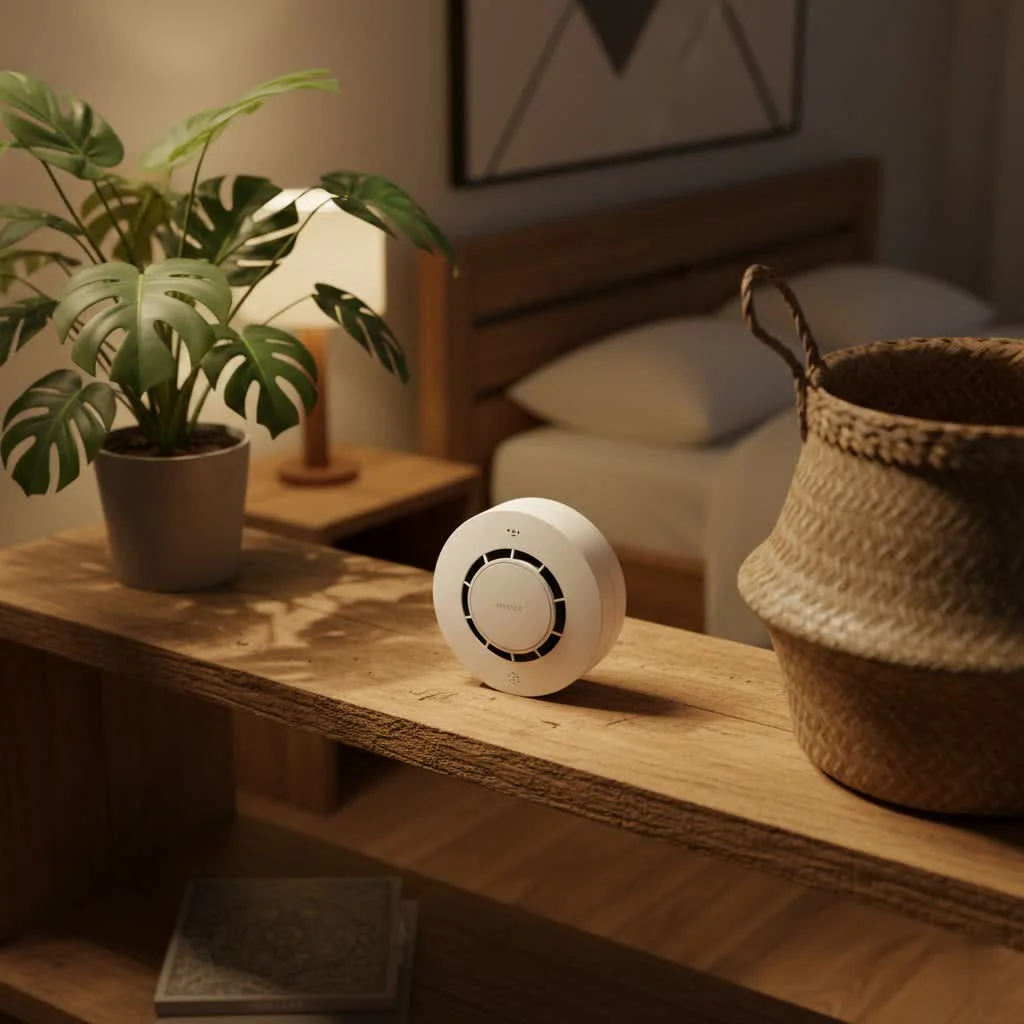
What are Smoke Detector Carbon Monoxide Detectors? Why are they essential?
A smoke detector carbon monoxide detector is a crucial home safety device designed to alert occupants to the presence of both smoke, indicating a fire, and dangerous levels of carbon monoxide gas. Smoke detectors work by sensing particulate matter in the air, while carbon monoxide detectors specifically identify the colorless, odorless, and tasteless gas produced by incomplete combustion.
The necessity of these detectors cannot be overstated. Fires can erupt quickly, often at night when residents are asleep, making early detection critical for safe evacuation. Carbon monoxide, commonly known as the “silent killer,” can result from faulty furnaces, water heaters, gas ranges, or clogged chimneys. Its insidious nature means it can overwhelm residents before they even realize there’s a problem, leading to severe illness or death. Equipping your home with a combined detector provides a comprehensive, multi-layered defense against both these pervasive household threats.
Modern combined detectors often leverage advanced sensor technology to ensure reliable performance. For smoke detection, they may use photoelectric or ionization sensors, or a combination of both. For carbon monoxide, an electrochemical sensor is typically employed, offering high accuracy in detecting CO levels.
Classifying Combined Smoke and Carbon Monoxide Detectors: Advantages and Disadvantages
When considering a combined smoke and carbon monoxide detector, it’s helpful to understand the underlying sensing technologies, especially for smoke, and then weigh the benefits and drawbacks of combining these functions into one unit.
Photoelectric Smoke Detection
Photoelectric sensors are particularly effective at detecting large smoke particles produced by slow, smoldering fires, which can burn for hours before erupting into flames. They work by directing a light source into a chamber; when smoke enters, it scatters the light into a sensor, triggering the alarm.
- Advantages: Highly responsive to smoldering fires, which often produce dense, visible smoke. Less prone to false alarms from cooking fumes compared to ionization detectors.
- Disadvantages: May be slower to respond to fast, flaming fires. Can sometimes be triggered by dust or steam if not properly maintained or placed.
Ionization Smoke Detection
|
Our Picks for the Best Smoke Detector in 2026
As an Amazon Associate I earn from qualifying purchases.
|
||
| Num | Product | Action |
|---|---|---|
| 1 | First Alert SMI100, Battery-Operated Smoke Alarm, 2-Pack |

|
| 2 | 6 in 1 Plug in Smoke and Carbon Monoxide Detector Combo, Portable Smoke, Gas & CO Detector with Battery Operated, Temp, Humidity - Smoke Alarm Carbon Monoxide Natural Gas Leak Detector for Home, RV |
|
| 3 | 3 Pack 10 Year Battery Operated Smoke and Carbon Monoxide Detector, Portable Fire Co Alarm for Home and Kitchen (White) |
|
| 4 | Smoke Alarm Fire Detector,Battery Operated Photoelectric Smoke Detector with Test Button and Low Battery Warning, Fire Alarms Smoke Detectors for Home, 6 Pack |
|
| 5 | First Alert SMI100-AC, Hardwire Interconnect Smoke Alarm with Battery Backup, 6-Pack |
|
| 6 | Kidde Hardwired Smoke Detector, AA Battery Backup, Interconnectable, LED Warning Light Indicators, 4 Pack |
|
| 7 | Kidde Smoke Detector, 10-Year Battery Powered, LED Warning Light Indicators |
|
| 8 | 4-in-1 Gas & Carbon Monoxide Detector, Plug-in & Battery Powered – Multi-Gas Protection, Accurate CO, Temperature & Humidity Monitoring, LCD Display, Adjustable Brightness, Sensitive Alarm |
|
| 9 | First Alert SMI100, Battery-Operated Smoke Alarm, 3-Pack |
|
| 10 | Kidde Hardwired Smoke & Carbon Monoxide Detector, AA Battery Backup Smoke Alarm, Interconnectable, LED Warning Light Indicators, 2 Pack |
|
Ionization smoke detectors contain a small amount of radioactive material that ionizes the air between two electrically charged plates, creating a current. When smoke enters the chamber, it disrupts this current, activating the alarm.
- Advantages: Typically more responsive to fast-flaming fires that produce smaller, less visible smoke particles.
- Disadvantages: More susceptible to false alarms from normal cooking activities or steam. Due to the very small amount of radioactive material, some consumers prefer alternatives, though the risk is minimal. Many modern combined units feature dual-sensor technology, incorporating both photoelectric and ionization capabilities for comprehensive smoke detection.
Electrochemical Carbon Monoxide Detection
Carbon monoxide detectors, whether standalone or integrated into a combined unit, primarily use electrochemical sensors. These sensors detect carbon monoxide by reacting with the gas, producing an electrical current that signals an alarm when CO levels reach dangerous thresholds over a specified time.
- Advantages: Highly accurate and reliable specifically for detecting carbon monoxide gas. Designed to meet strict safety standards for CO detection.
- Disadvantages: Only detects carbon monoxide and not other gases or smoke. The sensor has a finite lifespan, typically around 7-10 years, after which the entire unit needs replacement.
Combined (Dual Sensor) Smoke and Carbon Monoxide Detectors
These units offer a unified approach to home safety, providing both smoke and CO detection in one device. Many modern combined detectors feature advanced dual-sensor smoke technology (photoelectric and ionization) along with an electrochemical CO sensor.
- Advantages:
- Convenience: Fewer devices to install and maintain, reducing clutter on ceilings and walls.
- Cost-Effective: Often more economical than purchasing separate high-quality smoke and CO detectors for every required location.
- Comprehensive Protection: Offers a robust defense against two of the most critical household hazards.
- Smart Features: Many combined units now include smart home integration, offering remote alerts, app control, and interconnected systems.
- Disadvantages:
- Single Point of Failure: If the unit malfunctions, both smoke and CO detection capabilities are compromised.
- Placement Considerations: While manufacturers design combined units for optimal performance, traditional advice often suggested different ideal placements for smoke (high) and CO (various heights). However, modern, certified combined detectors are engineered to be effective when properly installed, typically on the ceiling, where they can detect both threats effectively. Concerns about CO “sinking” are a common misconception; CO mixes readily with air and distributes throughout a space.
Detailed Comparison Table of Smoke and Carbon Monoxide Detectors
Choosing the right detector involves understanding the nuances of each type. Here’s a comparison to help illustrate the differences and strengths of various options:
| Feature / Type | Standalone Photoelectric Smoke Detector | Standalone Ionization Smoke Detector | Standalone Carbon Monoxide Detector (Electrochemical) | Combined (Dual Sensor Smoke + CO) Detector |
|---|---|---|---|---|
| Primary Detection | Smoldering fires | Flaming fires | Carbon Monoxide gas | Smoldering, flaming fires, Carbon Monoxide |
| Sensor Type (Smoke) | Photoelectric | Ionization | N/A | Photoelectric + Ionization (Dual-Sensor) |
| Sensor Type (CO) | N/A | N/A | Electrochemical | Electrochemical |
| Response Time | Good for smoldering, slower for flaming | Good for flaming, slower for smoldering | Timely for CO accumulation | Comprehensive for both types of fires & CO |
| False Alarms | Less prone to cooking nuisance | More prone to cooking nuisance | Low, specific to CO | Generally low with advanced sensing |
| Typical Placement | High on wall or ceiling | High on wall or ceiling | Various heights (often breathing level), but distributes evenly | High on wall or ceiling for best overall coverage |
| Power Source | Battery or hardwired | Battery or hardwired | Battery, plug-in, or hardwired | Battery, plug-in, or hardwired |
| Smart Features | Available on some models | Available on some models | Available on some models | Widely available, often integrated |
| Lifespan | 10 years | 10 years | 7-10 years (sensor life) | 7-10 years (entire unit) |
| Certification | UL 217 | UL 217 | UL 2034 | UL 217 & UL 2034 |
Buying Guide: Choosing the Right Smoke and Carbon Monoxide Detector
Selecting the ideal smoke detector carbon monoxide detector requires careful consideration of your specific home and needs. As a technician with over a decade of experience, I’ve seen how the right choice can make all the difference.
Determine Your Usage Needs
Start by assessing the specific requirements of your living space.
- Area Size and Layout: For larger homes, interconnected systems (where one alarm triggers all others) are crucial. For smaller apartments, a few well-placed standalone units may suffice.
- Room Type: Consider areas prone to fire (kitchens, living rooms), areas where CO sources are present (furnace rooms, attached garages), and sleeping areas where early warning is critical.
- Budget: While safety shouldn’t have a price, there are excellent options across various price points. Prioritize certified units that meet essential safety standards.
Key Selection Criteria
When evaluating different models, keep these crucial factors in mind:
- Quality Certifications: Always look for detectors certified by reputable organizations like Underwriters Laboratories (UL). For smoke, ensure it meets UL 217, and for carbon monoxide, UL 2034. Combined units should carry both certifications. These certifications ensure the device has undergone rigorous testing for performance and reliability.
- Battery Life and End-of-Life Warning: Modern detectors often come with 10-year sealed batteries, eliminating annual battery changes. All detectors, regardless of battery type, have a lifespan of 7-10 years, after which the entire unit must be replaced. An “end-of-life” warning feature will audibly alert you when it’s time for replacement.
- Connectivity and Remote Notifications: Smart detectors offer features like Wi-Fi connectivity, sending alerts to your smartphone if an alarm is triggered or batteries are low. Interconnected systems, either wired or wireless, ensure that if one alarm sounds, all alarms in your home will follow suit, providing maximum warning.
- Ease of Installation and Maintenance: Look for models with clear installation instructions, easy-to-access test/silence buttons, and simple cleaning procedures.
- Alarm Type: Voice alerts can be less jarring and more informative than traditional chirps, often specifying the type and location of the threat (e.g., “Fire detected in the living room” or “Carbon monoxide detected”).
Top Combined Smoke and Carbon Monoxide Detectors Today
While specific models evolve, certain brands consistently offer high-quality combined detectors with excellent features. Here are common types and what makes them stand out:
- Smart Home Integrated Detectors (e.g., Google Nest Protect, First Alert SC5): These premium devices offer seamless integration with smart home ecosystems, providing mobile alerts, remote silencing, and self-testing features. They often include additional perks like path lights and voice notifications, making them ideal for tech-savvy homeowners seeking maximum convenience and control.
- 10-Year Sealed Battery Units (e.g., Kidde 21026065, First Alert SCO7CN): Perfect for those who prefer minimal maintenance, these battery-powered units boast a 10-year lifespan without needing battery changes. They are easy to install, making them a popular choice for comprehensive protection without the need for hardwiring.
- Hardwired with Battery Backup Detectors (e.g., First Alert BRK SC7010BV): These models connect directly to your home’s electrical system and include a battery backup to ensure operation during power outages. They are often interconnected, so all alarms sound simultaneously, offering robust protection for larger homes.
- Interconnected Wireless Systems (e.g., X-Sense SC01): Designed for larger or multi-story homes, these detectors communicate wirelessly, ensuring that an alarm in one area triggers all connected units throughout the property. This is vital for maximizing evacuation time, especially in expansive layouts.
“Investing in a high-quality combined smoke and carbon monoxide detector is not just buying a device; it’s buying invaluable time. Early detection gives your family the precious moments needed to escape safely.” – John Davis, Certified Fire Safety Specialist
Optimal Placement for Smoke and Carbon Monoxide Detectors
Correct placement is as vital as the quality of the detector itself. Strategic positioning ensures the earliest possible detection of threats.
General Principles:
- Install detectors on every level of your home, including the basement and finished attics.
- Place one inside every bedroom and in the hallway outside each sleeping area.
- Avoid placing detectors too close to potential sources of nuisance alarms (e.g., kitchens, bathrooms).
Specific Locations:
- On Ceilings: Since both smoke and carbon monoxide rise, ceiling placement is generally recommended for combined units. Mount them at least 4 inches (10 cm) from walls.
- On Walls: If ceiling mounting isn’t possible, place wall-mounted detectors between 4 and 12 inches (10-30 cm) from the ceiling.
- Near Sleeping Areas: Place a detector within 15 feet (4.6 meters) of all sleeping areas to ensure occupants are alerted quickly, even during sleep.
- Near CO Sources: Consider placing additional CO-only detectors near potential CO sources like furnaces, water heaters, and attached garages, though always adhering to manufacturer guidelines.
Locations to Avoid:
- Within 10 feet of cooking appliances: Cooking fumes can easily trigger false smoke alarms.
- Near bathrooms with showers: Steam can also cause nuisance alarms.
- In dusty areas: Workshops or laundry rooms might generate dust that interferes with sensors.
- Near air vents, fans, or windows: Drafts can prevent smoke or CO from reaching the sensor.
- In direct sunlight or extreme temperatures: These conditions can affect sensor performance.
It’s a common misconception that carbon monoxide is heavier than air and sinks to the floor. In reality, carbon monoxide has a density very similar to air and mixes evenly throughout a room. Therefore, placing combined smoke and carbon monoxide detectors on the ceiling or high on a wall is effective for detecting both hazards.
How to Install and Maintain Smoke and Carbon Monoxide Detectors
Proper installation and ongoing maintenance are crucial for ensuring your detectors provide reliable protection for their entire lifespan.
Step-by-Step Installation:
- Read the Manual: Always start by thoroughly reading the manufacturer’s instructions for your specific model.
- Choose the Location: Follow the optimal placement guidelines discussed above.
- Mount the Bracket: Use the provided screws and anchors to securely attach the mounting bracket to the ceiling or wall. For hardwired units, this step involves connecting to your home’s electrical wiring – it is best to consult a professional electrician for this.
- Install Batteries: If it’s a battery-powered unit, insert the recommended batteries (or ensure the sealed 10-year battery is activated).
- Attach Detector to Bracket: Twist or slide the detector onto the mounting bracket until it clicks securely into place.
- Test the Unit: Press and hold the “test” button until the alarm sounds. This confirms the unit is functioning correctly. For interconnected systems, verify that all linked alarms sound.
Regular Maintenance Schedule:
- Monthly Testing: Press the test button on each detector once a month to ensure the alarm sounds.
- Annual Battery Replacement (for units with replaceable batteries): If your unit uses replaceable batteries, change them at least once a year. A good reminder is to do this when you change your clocks for daylight saving time.
- Cleaning: Gently vacuum or wipe the detector’s exterior every six months to remove dust and debris that could obstruct the sensors and cause false alarms.
- Unit Replacement: Replace the entire smoke detector carbon monoxide detector unit every 7-10 years, or according to the manufacturer’s recommendation. The “replace by” date is often printed on the back of the unit.
Handling False Alarms:
If your detector sounds a false alarm due to cooking smoke or steam, press the “silence” button. If the alarm continues, ventilate the area by opening windows and doors. Never remove the batteries or disconnect a hardwired unit to silence an alarm without first verifying there is no actual threat. Persistent false alarms could indicate a faulty unit or improper placement, and should be addressed promptly.
Safety Standards and Certifications for Smoke and Carbon Monoxide Detectors
Understanding the relevant safety standards is fundamental to choosing a reliable smoke detector carbon monoxide detector. These certifications ensure that devices meet stringent performance and safety requirements.
- UL 217 (Standard for Smoke Alarms): This is the primary standard for smoke alarms in the United States. It outlines performance requirements to ensure smoke alarms effectively detect fire conditions, including those involving modern synthetic materials, while minimizing nuisance alarms.
- UL 2034 (Standard for Single and Multiple Station Carbon Monoxide Alarms): This standard sets requirements for carbon monoxide detectors, ensuring they reliably detect dangerous levels of CO, respond within specific timeframes, and are resistant to false readings from common household chemicals.
- Combined Units: For a combined smoke and carbon monoxide detector to be fully certified, it must comply with both UL 217 and UL 2034. This dual certification guarantees comprehensive testing for both hazards.
These certifications not only validate the device’s accuracy and reliability but also dictate specific alarm patterns. A smoke alarm, including the smoke detection function of a combined unit, typically generates a three-tone pattern when smoke is detected. In contrast, a carbon monoxide alarm will emit a distinct four-tone pattern, allowing occupants to quickly identify the specific type of threat. Always confirm that any detector you purchase bears these crucial UL or equivalent national certification marks on its packaging.
Conclusion
The evolution of home safety technology has brought us the indispensable smoke detector carbon monoxide detector, a single device offering dual protection against the most prevalent household hazards. From understanding the nuances of photoelectric and ionization smoke sensors, coupled with precise electrochemical CO detection, to mastering optimal placement and maintenance, equipping your home with these devices is a proactive step towards safeguarding your family. certifications like UL 217 and UL 2034 are your benchmarks for reliability, and features like 10-year sealed batteries and smart home integration enhance convenience and peace of mind. By making an informed choice and committing to regular maintenance, you ensure that your home remains a sanctuary. Are you confident your home is fully protected against both fire and the silent killer?
Frequently Asked Questions
How often should I test my combined smoke and carbon monoxide detector?
You should test your combined smoke and carbon monoxide detector at least once a month. Simply press and hold the “test” button until the alarm sounds. This quick check ensures that the unit’s electronics and alarm function are working correctly.
Where is the best place to install a combined smoke and carbon monoxide detector?
The best placement is on the ceiling or high on a wall, away from corners, air vents, and within 15 feet of all sleeping areas. Install one on every level of your home, including the basement. Modern, certified combined units are designed to effectively detect both smoke and CO from these high positions.
How do I know when to replace my smoke detector carbon monoxide detector?
Most smoke and carbon monoxide detectors have a lifespan of 7-10 years from the date of manufacture. The unit will often have an “end-of-life” warning or a “replace by” date printed on it. It’s crucial to replace the entire unit at this time, as sensors degrade over time.
Can cooking fumes trigger a false alarm in my combined detector?
Yes, cooking fumes, especially from intense cooking, can sometimes trigger a false smoke alarm in combined detectors, particularly those with ionization sensors. To minimize this, place detectors at least 10 feet away from cooking appliances and ensure good ventilation in the kitchen area.
What is the difference between the smoke alarm sound and the carbon monoxide alarm sound?
Certified combined detectors use distinct alarm patterns. A smoke alarm will typically produce a three-tone temporal pattern, while a carbon monoxide alarm will emit a four-tone temporal pattern. This helps occupants differentiate between a fire and a CO leak.
Do combined detectors really work effectively for both smoke and CO?
Yes, modern combined smoke and carbon monoxide detectors that are certified to both UL 217 and UL 2034 standards are rigorously tested to effectively detect both hazards from a single, optimal placement, usually on the ceiling. They are designed to overcome any theoretical placement challenges.
Are smart combined detectors worth the extra cost?
Smart combined detectors offer significant benefits like remote notifications to your phone, app control for silencing, and self-testing features. These features can provide added peace of mind, especially when you are away from home, and streamline maintenance, making them a worthwhile investment for many.
Get our weekly buyer guide
Practical specs, not advice. Unsubscribe anytime.

I recently upgraded all my old smoke alarms to the combined smoke and CO detectors after reading about how important it is to have both. It’s such a relief to have one unit doing double duty, especially since my house is a bit older. Installation was pretty straightforward, and I feel a lot safer knowing we’re protected from both fire and that silent killer, carbon monoxide.
I bought a few of these combined units for my new apartment. While I love the idea of having both detections in one device, one of them went off for no apparent reason in the middle of the night, which was quite startling. I checked everything and it seems to be fine now, but it made me a little wary. Still, the core concept of protecting against both smoke and carbon monoxide is essential, so I’m keeping them.
As someone who’s always looking for ways to enhance home safety, these integrated smoke and carbon monoxide detectors are fantastic. The convenience of having a single unit for both threats is unmatched. I particularly liked the point about optimal placement; it really helped me decide where to put them for maximum effectiveness. Great product for any homeowner.
These dual-purpose detectors are a game-changer for peace of mind. I appreciate not having to buy and install separate units for smoke and CO. The only minor complaint I have is that the battery compartment on one of them was a little stiff to open, but once I got it, everything else was smooth sailing. Definitely recommend for anyone looking to simplify their home safety.