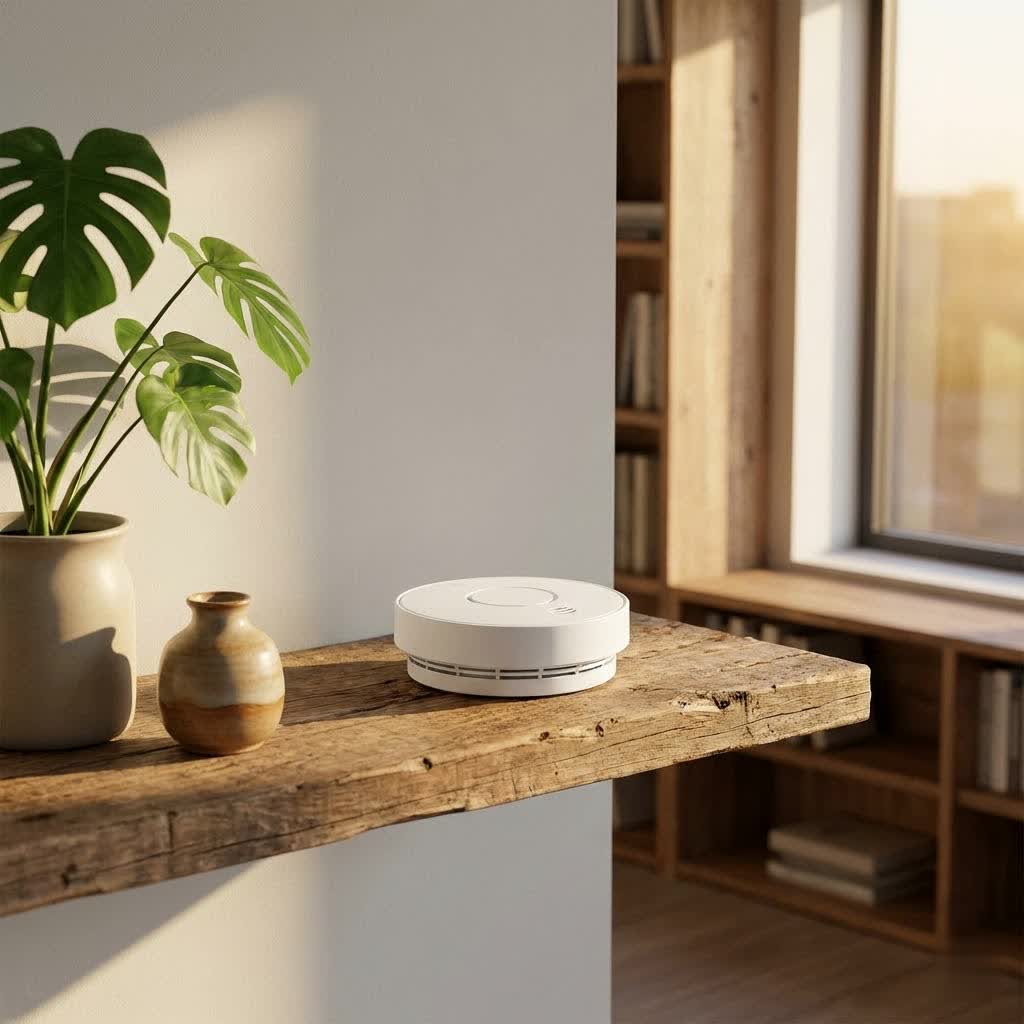
In the blink of an eye, a small spark can escalate into a devastating house fire, putting your loved ones and property at grave risk. For over a decade, I’ve seen firsthand how critical early detection is in fire safety, witnessing the evolution of smoke detection technology from rudimentary devices to sophisticated smart systems. Choosing the right smoke detector is not just a purchase; it’s an investment in peace of mind. This comprehensive guide will illuminate the world of home smoke detectors, helping you understand the available options, their unique benefits, and how to select the perfect solution to safeguard your home.
What is a Smoke Detector, and Why is it Essential?
A smoke detector, often referred to as a smoke alarm, is a critical safety device designed to sense the presence of smoke, a primary indicator of fire. Upon detection, it emits a loud audible alert, providing occupants with crucial time to escape and call emergency services. This early warning can be the difference between life and death; tragically, statistics show that three out of five fire deaths occur in homes without working smoke alarms, often when residents are asleep. Modern home fires spread significantly faster due to contemporary building materials and furnishings, making prompt detection more vital than ever.
Types of Smoke Detectors: Pros and Cons
Understanding the different types of smoke detectors is the first step in making an informed choice for your home’s protection. Each type employs a distinct technology to detect smoke and is more sensitive to particular kinds of fires.
Photoelectric Smoke Detectors
Photoelectric smoke detectors operate by using a chamber with a light source and a photosensitive sensor. When smoke enters the chamber, it scatters the light, directing it towards the sensor and triggering the alarm.
- Pros: They are highly effective at detecting slow, smoldering fires, which often produce large amounts of visible smoke before bursting into flames. These fires can be caused by electrical faults or unattended cigarettes. Photoelectric alarms are also generally less prone to nuisance alarms from cooking fumes.
- Cons: They may respond slower to fast-flaming fires that produce less visible smoke. Some older models might be more susceptible to false alarms from dust.
Ionization Smoke Detectors
Ionization smoke detectors contain a small amount of radioactive material that ionizes the air between two electrically charged plates, creating a constant current. When smoke particles enter the chamber, they disrupt this current, activating the alarm.
- Pros: Ionization alarms are typically quicker to detect fast-flaming fires, such as those caused by combustible liquids or paper fires, which produce tiny, invisible combustion particles. They are often more budget-friendly.
- Cons: They are less effective at detecting smoldering fires and are more susceptible to false alarms from common activities like cooking or steam from showers. This can lead to occupants disabling the alarms, rendering them useless in a real emergency. They also contain a very small amount of radioactive material, though it poses no health risk.
Dual-Sensor (Combination) Smoke Detectors
|
Our Picks for the Best Smoke Detector in 2026
As an Amazon Associate I earn from qualifying purchases.
|
||
| Num | Product | Action |
|---|---|---|
| 1 | Kidde Hardwired Smoke Detector, AA Battery Backup, Interconnectable, LED Warning Light Indicators, 4 Pack |

|
| 2 | Kidde Smoke Detector, 10-Year Battery Powered, LED Warning Light Indicators |
|
| 3 | 3 Pack 10 Year Battery Operated Smoke and Carbon Monoxide Detector, Portable Fire Co Alarm for Home and Kitchen (White) |
|
| 4 | First Alert SMI100-AC, Hardwire Interconnect Smoke Alarm with Battery Backup, 6-Pack |
|
| 5 | 6 in 1 Plug in Smoke and Carbon Monoxide Detector Combo, Portable Smoke, Gas & CO Detector with Battery Operated, Temp, Humidity - Smoke Alarm Carbon Monoxide Natural Gas Leak Detector for Home, RV |
|
| 6 | First Alert SMI100, Battery-Operated Smoke Alarm, 3-Pack |
|
| 7 | 4-in-1 Gas & Carbon Monoxide Detector, Plug-in & Battery Powered – Multi-Gas Protection, Accurate CO, Temperature & Humidity Monitoring, LCD Display, Adjustable Brightness, Sensitive Alarm |
|
| 8 | Kidde Hardwired Smoke & Carbon Monoxide Detector, AA Battery Backup Smoke Alarm, Interconnectable, LED Warning Light Indicators, 2 Pack |
|
| 9 | Smoke Alarm Fire Detector,Battery Operated Photoelectric Smoke Detector with Test Button and Low Battery Warning, Fire Alarms Smoke Detectors for Home, 6 Pack |
|
| 10 | First Alert SMI100, Battery-Operated Smoke Alarm, 2-Pack |
|
As the name suggests, dual-sensor smoke detectors incorporate both ionization and photoelectric sensors within a single unit. This design aims to combine the strengths of both technologies.
- Pros: By detecting both flaming and smoldering fires, these alarms offer comprehensive protection, significantly increasing the chances of early detection across a wider range of fire types. They are also designed to be more resistant to nuisance alarms compared to single-sensor ionization units. Many dual-sensor units also integrate carbon monoxide (CO) detection, providing an additional layer of safety.
- Cons: They are typically more expensive than single-sensor models.
Smart Smoke Detectors
Smart smoke detectors represent the modern of home fire safety, offering advanced features beyond traditional alarms. These devices connect to your home’s Wi-Fi network and often integrate with other smart home ecosystems.
- Pros: They provide real-time alerts to your smartphone, wherever you are, allowing you to monitor your home’s safety remotely. Many include voice alerts that specify the type and location of the hazard (e.g., “Smoke detected in the kitchen!”). They can be interconnected wirelessly, ensuring all alarms sound simultaneously. Additional features may include carbon monoxide detection, an escape light, and integration with smart thermostats or security systems. Some offer long-lasting 10-year sealed batteries and quiet low-battery alerts via an app.
- Cons: Smart smoke detectors generally come with a higher price tag. Their functionality relies on a stable Wi-Fi connection, and some may have compatibility limitations with certain smart home platforms.
Detailed Comparison Table of Smoke Detector Types
| Feature | Photoelectric | Ionization | Dual-Sensor (Combination) | Smart |
|---|---|---|---|---|
| Sensor Type | Light scattering | Ionization chamber | Photoelectric & Ionization | Varies (often photoelectric or dual) + smart tech |
| Best For | Slow, smoldering fires (e.g., electrical, couches) | Fast, flaming fires (e.g., paper, grease) | Both smoldering and flaming fires | Both smoldering and flaming fires (with CO) & remote monitoring |
| False Alarm Susceptibility | Low for cooking, moderate for dust | High for cooking/steam | Lower overall (can distinguish better) | Lower overall (with advanced algorithms) |
| Typical Cost | Moderate | Low | Moderate to High | High |
| Key Advantage | Detects smoldering fires earliest | Detects flaming fires earliest | Comprehensive fire detection | Remote alerts, smart home integration, voice alerts |
| Key Disadvantage | Slower for flaming fires | Slower for smoldering fires, more false alarms | Higher initial cost | Higher cost, Wi-Fi dependent |
| Recommended Placement | Living rooms, bedrooms, hallways | Areas without frequent cooking/steam | All general living areas, bedrooms | Throughout the home, especially for interconnected systems |
Your Guide to Choosing the Best Home Smoke Detector
Selecting the ideal smoke detector involves evaluating your specific needs, considering key features, and recognizing trusted brands.
Assess Your Home’s Needs
- Space and Layout: Consider the size and number of levels in your home. The National Fire Protection Association (NFPA) recommends at least one smoke alarm on every level, including the basement, inside each bedroom, and outside each separate sleeping area.
- Potential Fire Risks: Do you cook frequently? Have a fireplace? Old wiring? The type of fire most likely to occur in certain areas might influence your choice. For instance, kitchens may benefit from photoelectric or dual-sensor alarms that are less prone to nuisance alarms from cooking.
- Budget: While safety should be paramount, smoke detectors are available at various price points. Long-term costs include battery replacements and the unit’s lifespan.
Key Factors for Selection
- Certifications: Always look for smoke detectors certified by recognized testing laboratories such as UL (Underwriters Laboratories) in the US or EN (European Norm) in Europe. The latest UL 217 10th Edition standard ensures improved detection accuracy and reduced nuisance alarms, particularly from cooking.
- Power Source:
- Battery-Operated: Easy to install, but require regular battery replacement (typically annually for 9V batteries). Opt for models with sealed 10-year lithium-ion batteries for maintenance-free operation for a decade.
- Hardwired: Connected to your home’s electrical system, often required by local building codes for new construction or renovations. They usually come with a battery backup for power outages, which still needs annual testing and replacement.
- Interconnectivity: Choose interconnected alarms so that when one alarm sounds, all alarms in your home go off simultaneously. This is crucial for larger homes or homes with multiple levels, providing earlier warnings to everyone. Both wired and wireless interconnected systems are available.
- Carbon Monoxide (CO) Detection: CO is a colorless, odorless, and highly toxic gas produced by incomplete combustion. Many dual-sensor and smart smoke detectors now include CO detection, offering vital protection against this silent killer.
- Smart Features & App Integration: If you desire remote monitoring, smartphone alerts, voice notifications, and integration with your smart home system (like Google Home or Alexa), a smart smoke detector is an excellent choice. These features provide enhanced convenience and peace of mind.
- Ease of Installation & Maintenance: Look for models with clear instructions, easy mounting mechanisms, and a readily accessible test/hush button. Regular maintenance is key for proper functioning.
Top Recommended Home Smoke Detectors
Based on expert reviews and consumer feedback, here are a few highly regarded options spanning different needs and price points:
- Google Nest Protect (2nd Gen): Often considered a top-tier smart smoke and carbon monoxide alarm. It features a split-spectrum sensor (effectively a dual-sensor), provides friendly voice alerts about the danger’s location, sends smartphone notifications, and includes a path light. Available in wired and battery versions with 10-year sealed batteries. It integrates seamlessly with other Nest products.
- X-Sense SC07 Wireless Smoke & CO Alarm: An excellent overall pick, this dual-sensor unit detects both smoke and carbon monoxide. It features a clear digital display for CO levels and offers wireless interconnectivity, making it easy to create a whole-home system.
- Kidde Smart Smoke & Carbon Monoxide Detector: Kidde offers a range of reliable options, including smart and wireless interconnected models. Their smart detectors provide smartphone alerts and can be integrated into certain smart home ecosystems, often at a more budget-friendly price than some premium smart options.
- First Alert Onelink Safe & Sound: This premium smart alarm not only detects smoke and carbon monoxide but also doubles as a Bluetooth speaker and supports Apple HomeKit and Amazon Alexa for voice control. It offers robust smart home integration.
Optimal Placement for Smoke Detectors
Proper placement is as critical as choosing the right detector. Smoke alarms need to be installed where they can detect smoke early and effectively alert occupants.
- General Principles: Smoke and heat rise, so alarms should be mounted high on walls or ceilings. Avoid “dead air” spaces like the apex of vaulted ceilings or corners where walls and ceilings meet.
- Specific Locations:
- Inside every bedroom: This is essential as most fatal fires occur at night while people are sleeping.
- Outside each separate sleeping area: Place alarms in hallways or common areas adjacent to bedrooms.
- On every level of the home, including the basement: Even if there are no bedrooms on a particular level, an alarm is crucial.
- On levels without bedrooms: Install alarms in the living room, den, or near the stairway to the upper or lower levels.
- Locations to Avoid:
- Within 10 feet (3 meters) of cooking appliances: This minimizes false alarms from cooking fumes.
- Near windows, doors, or HVAC registers: Drafts can interfere with smoke reaching the detector.
- In dusty, dirty, or greasy areas: Garages, furnace rooms, or laundry rooms may cause nuisance alarms or reduce sensor effectiveness. Consider a heat detector in these areas instead of a smoke detector.
- In bathrooms: Steam can trigger false alarms.
If mounting on a wall, ensure the top edge of the alarm is within 4 to 12 inches (10 to 30 cm) from the ceiling. For sloped or cathedral ceilings, place the alarm within 3 feet (0.9 meters) of the highest point, but not in the apex itself (at least 4 inches down).
Installation and Maintenance Essentials
Once you’ve selected and placed your smoke detectors, proper installation and routine maintenance are key to ensuring their reliability.
Installation:
- Read the Manual: Always follow the manufacturer’s specific instructions for your model.
- Choose Mounting Location: Adhere to the optimal placement guidelines discussed above.
- Mount the Base: Secure the mounting bracket to the ceiling or wall using the provided screws.
- Connect Power (Hardwired): If hardwired, connect the detector’s wires to your home’s electrical system as per local codes and the manual. Always turn off power at the circuit breaker first.
- Insert Battery: Install fresh batteries (or ensure the 10-year sealed battery is activated).
- Attach Alarm to Base: Twist or snap the alarm unit onto the mounted bracket.
- Test the Alarm: Press and hold the test button until the alarm sounds. This verifies proper functioning.
Maintenance:
- Test Monthly: Press the test button on each alarm every month to ensure the battery and alarm sounder are working.
- Clean Annually: Gently vacuum or wipe the exterior of the smoke detector to remove dust and cobwebs that could impede smoke entry or cause false alarms.
- Replace Batteries (for 9V models): Replace alkaline 9V batteries at least once a year, or immediately when you hear the low-battery chirp. For 10-year sealed battery models, no replacement is needed for the unit’s lifespan.
- Replace the Entire Unit: Smoke detectors have a lifespan of about 10 years from the date of manufacture. After this period, sensors can degrade, and the unit may not function reliably. Check the manufacture date on the back of your alarm and replace any units older than 10 years.
If your smoke detector issues a false alarm due to cooking or steam, use the “hush” button (if available) to temporarily silence it, rather than removing the battery.
Safety Standards and Certifications for Smoke Detectors
Certifications are your assurance that a smoke detector has been rigorously tested and meets stringent safety and performance requirements.
- UL 217 (Underwriters Laboratories): This is a critical product safety standard for smoke alarms in the United States. The latest 10th edition of UL 217 incorporates new fire test scenarios, including polyurethane foam fires (common in modern furnishings), and improved resistance to nuisance alarms from cooking smoke. A UL-listed alarm with the Enhanced UL Certification Mark indicates compliance with these updated standards, offering superior protection.
- EN 14604: This is the European standard for smoke alarms, ensuring similar levels of performance and reliability for devices sold in European markets.
- ETL Listed: Similar to UL, ETL is another Nationally Recognized Testing Laboratory (NRTL) that certifies products meet safety standards.
These certifications confirm that the product has undergone extensive testing to ensure it will perform as expected in a real emergency, providing peace of mind that your home’s first line of defense is trustworthy.
Conclusion
Protecting your home and family from the devastating impact of fire starts with reliable smoke detection. From understanding the nuances of photoelectric and ionization technologies to embracing the advanced capabilities of smart detectors, the right choice empowers you with crucial early warning. By selecting certified devices, adhering to optimal placement guidelines, and performing routine maintenance, you create a robust safety net for your household. Don’t wait for an emergency; take proactive steps today to ensure your home is equipped with the best possible smoke detection system. What steps will you take this week to enhance your home’s fire safety?
Frequently Asked Questions
How many smoke detectors do I need for my home?
The NFPA recommends installing a smoke detector inside every bedroom, outside each separate sleeping area, and on every level of your home, including the basement. Larger homes or homes with split levels may require additional alarms for comprehensive coverage.
What’s the difference between a smoke detector and a carbon monoxide detector?
A smoke detector is designed to detect smoke particles, indicating a fire. A carbon monoxide (CO) detector senses the presence of CO gas, a byproduct of incomplete combustion. While distinct, many modern alarms combine both functions into a single unit for enhanced safety.
How often should I replace my smoke detectors?
Smoke detectors should be replaced every 10 years from the date of manufacture, which is typically printed on the back of the unit. Beyond this period, sensors can degrade, and the alarm’s reliability may be compromised, even if it appears to be working.
Can smart smoke detectors replace traditional ones?
Yes, smart smoke detectors are designed to meet or exceed the safety standards of traditional alarms while offering additional features like remote alerts, voice notifications, and smart home integration. Many models also include dual-sensor technology and carbon monoxide detection for comprehensive protection.
Where should I avoid installing smoke detectors?
Avoid installing smoke detectors within 10 feet of cooking appliances, in bathrooms (due to steam), near windows or doors (where drafts can interfere), or in dusty/greasy areas like garages or furnace rooms, as these locations are prone to nuisance alarms or hindered performance.
Get our weekly buyer guide
Practical specs, not advice. Unsubscribe anytime.

After reading about the importance of early detection, I finally replaced my decade-old detectors. I opted for a model with a 10-year sealed battery, which means no more annoying chirps in the middle of the night from a dying battery. It’s a small detail but makes a huge difference in convenience and reliability. Highly recommend checking your detector’s age!
This guide really helped me understand the difference between ionization and photoelectric detectors. I ended up getting a dual-sensor unit for comprehensive coverage, and it feels much safer knowing I’m protected against both fast-flaming and slow-burning fires. The loud audible alert is definitely effective, even from across the house.
I recently upgraded all my old smoke alarms to the smart systems mentioned in the guide, and I couldn’t be happier. The ability to get alerts on my phone, even when I’m not home, is a game-changer for peace of mind. Installation was surprisingly straightforward, and the app integration works flawlessly. Definitely worth the investment for ultimate safety.
I appreciate the detailed breakdown of different smoke detector types. I went with a photoelectric model for my living room, as suggested for smoldering fires. It works fine, but the alarm is a bit too sensitive sometimes, going off when I’m just toasting bread. It’s a minor annoyance, but something to consider if you have a small kitchen.